Showing posts with label Wine Writing. Show all posts

May 22, 2014

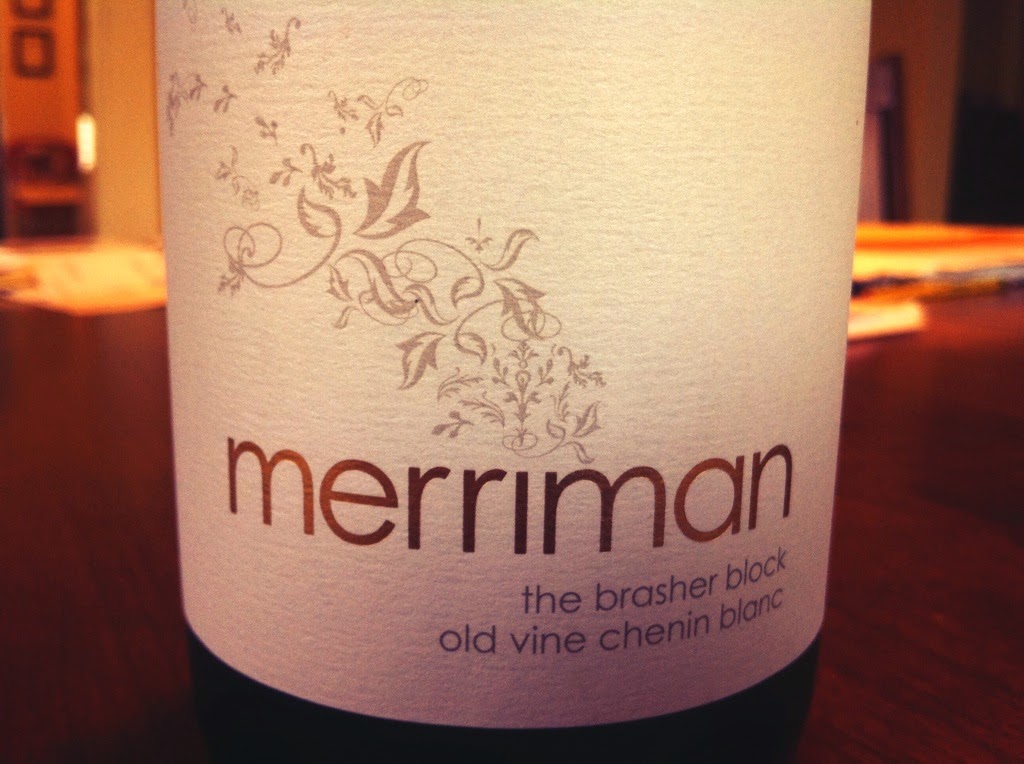
2012 Merriman Chenin Blanc The Brasher Block

I haven't posted in quite a while but this wine is so good, I'm compelled write.

I've long thought that Chenin Blanc is a white grape variety that should do really well in the new world. Not as cheap, sweet, insipid white wine that we know from California jug wine.

Instead, as it can be when grow in the right places and farmed with the belief that it can produce quality wine. Wine that's rich but nervy, golden fruited and waxy, even honeyed. To my knowledge, there are still too few good examples. Perhaps I should make one.

I'm inspired by a wine like this, the 2012 Merriman Chenin Blanc The Brasher Block, from nearly 40-year-old vines outside of Yakima, WA.

It's deeply aromatic, with red apples, wool, herbs and wax scents. The flavors are rich, with yellow fruit, wax and bright acidity that dominates a bit but also carries the finish. The wine will need time to show its best, but it's electric now and already simply delicious.

I'd age this three to five years, or maybe a few more beyond that, and expect the intensity of the wine to unfurl on the clothesline-like acidity. Great job Merriman and my old bud Erik Brasher. I love this.

November 09, 2010

Harvest 2010 wrap - part two

See part one here.

We left off at pumping the freshly crushed grape juice over the grapes skins, to aerate the "must" (what you call the unfermented, crushed grapes) and gently begin extracting color and aroma from the skins into the juice. Then our technique is to let the fermenters sit for days on end until fermentation starts naturally. Temperatures and sugar levels are checked daily, and things monitored to make sure no issues arise. Once the grapes have naturally come up in temperature by the beginning of fermentation, this year about a week later, we punch down the cap of grape skins that rises up in the bin (think bread dough rising).

Once fermentation is going in earnest, the cap rises nearly to the top of the fermenter and things warm up significantly. This year temperatures rise to the low 90sF. Here you can see the thermometer reading about 84F.

The view from above a bin, the punchdown tool in the fermenting must and the telltale visual of fermentation, foam, rising through the hole made in the cap. The cap of grape skins can be a foot thick or more in these 1.5 ton fermenters, and they are tough to punch through at the peak of fermentation. As things wind down, the cap softens and things are easier to mix.

Here's Armstrong grower Doug Ackerman lending a hand with the punchdown tool.

Things are more than busy in any winery at harvest time. Still, there are moments of reflection, especially on a beautiful evening when you know you'll be working late.

And things frequently go late. Bin after bin of grapes to be sorted. Then everything to clean up, only to get dirty again the next day.

Mornings are the time to check the fermenters, using a strainer to get new wine to test for sugar level, temperature and acidity. And senory evaluation, meaning smelling, tasting and of course spitting, to see how much tannin is in the wine, among other things to watch for.

Here's a beautiful shot of pinot blanc destined for another label fermenting, the bubbles of carbon dioxide sparkling like stars. Stars that smell like guava. Space like that would be nice, no?

When fermentation is done, it's time to drain fermenters. Here is one of the Armstrong bins three weeks after picking and processing. Using a sieve, the new wine is pumped into another bin to settle for a few days, the grape skins scooped out to smaller bins that can be dumped into the press.

Here's that wine being pumped into the settling bin.

Here are the grape skins dumped by forklift into the press.

About 80% of red wine from a fermenter is "free run," meaning it is liquid you can draw off the skins without any work. The other 20% is "press wine" that comes from squeezing the skins. Here's the press pan full of press wine, much cloudier than the free run wine for all the solids pressed out along with the wine.

After a few days of settling, the final task is putting the new wine in barrels. Once everything is in barrel, harvest is essentially done. Here's a tag on one of the iron barrel racks that needed some repainting to protect against rust before barrel filling.

The barrels get cleaned and filled with wine, stacked by fork lift and stored for a year or more of ageing. Harvest is now done, and never a moment too soon. It's November and time to begin looking forward to the coming year.

November 08, 2010

Harvest 2010 wrap - part one

We're back after a busy month bringing in grapes and making new wine. Rather than detail the events just in words, let's try a more image-based approach, starting back in the middle of the growing season.

Here were are in late July at Armstrong vineyard on Ribbon Ridge, well past flowering so that the grape vines have set their crop but well before veraison where the grapes turn color and begin to ripen. All looks good, as we'll see, things continue to go well despite strange spring, summer and fall weather that makes even jaded Oregonians think twice. Cold and wet in spring. Mild in the summer. Ultimately perfect in the fall.

Speaking of perfect, here's my bride at Armstrong on that gorgeous late July night, walking in the paddock with our daughter, chasing neighbor horses. Life is good on Ribbon Ridge.

Our son Martin in the vines this same night. Looks like a future Oregonian vineyard hand and cellar worker if you ask me, not that I'm pushing the kid too hard.

Meanwhile, down at Zenith Vineyard the Pommard clone Pinot Noir in Block 6G is looking good in mid-September. Leaves completely pulled to promote good airflow with our cool and occasionally downright humid late summer conditions. Veraison has come and gone but harvest is still weeks away yet.

Up at Armstrong, the grapes are looking better and better. You can even see a little dehydration, not something we look for but something that indicates the exceptional ripeness this vineyard achieved in what was a challenging year in many sites.

Daughter Dolores in the vines at Armstrong, late summer. We are on a vineyard walk talking about ripeness, what it looks, feels and tastes like. She is pretty interested. One of the highlights of my summer for sure.

Yours truly, in a rare appearance on these pages. Enough.

Early October now at Zenith. Lower leaves starting to yellow, fruit more than completely exposed but looking fabulous. Tim Ramey and company at Zenith do an incredible job.

That same day, up at Armstrong where leaves in the 667 block are also starting to turn. I pull cluster samples at both sites to see for myself how things measure out and taste.

Back at the winery, those samples provide the first look at 2010. Juice coloring up pretty quickly, definitely a sign of ripeness. Flavors sweet with strong acidity. Sugars higher than expected and the call is to pick two days later at Armstrong, the following week at Zenith.

That means it's time to wash picking bins. Harvest is on.

Friday morning, October 8 at Armstrong vineyard for the first harvest off this site planted in 2007. The crew works fast and clears all 12+ acres in half a day. Amazing work.

The sun comes out after the clouds burn off, and the grapes arrive at the winery. Now the real work for us lazy cellar people begins. Meanwhile the pickers are undoubtedly drinking beer. Well earned.

Jennifer on the sorting line, smiling because this is just the beginning. And because this is great looking fruit. After several hours of sorting through each cluster, it's not so fun. But she even looks great then too.

The final shot of part one - a pump over of the newly crushed grapes to mix them well before they sit until fermentation begins naturally. That means no punching or pumping for a week or more. Nothing until things get going really well, then twice daily punchdowns to mix things well and aerate the fermenting grapes. We'll see next time how things proceed.

October 25, 2010

Art, science and luck - harvest 2010

A friend gave me this terrific phrase that pretty much sums up my view of making wine - art, science, luck. It doesn't just have the right elements. It has them in order.

Great wine is an expression of specific grapes, of a place and a season. It is an artistic expression, and not simply that of the winemaker. Wine as we know it is not natural without human intervention. Still, humans are a part of nature and our role in guiding grapes to reflect what we at least perceive to be their nature is fundamental to what's interesting and artful in wine. Anyone can ferment something and make it drinkable. I believe the art of making great wine is about helping the uniqueness of a specific lot of grapes become real and beautiful. Something you can smell and taste.

Of course, there is science. We study the biology and chemistry of soil, plants and fruit in the vineyard. Then we take the grapes at harvest and analyze their components, perhaps intervening to preserve the integrity of what's there. We monitor sugar, acidity levels and temperature throughout fermentation, observing smells, tastes and textures along the way. For me, the goal of science is to understand what's present and what's happening, all with the intent of allowing what's there to best reveal itself in the finished wine.

And there's luck. Luck implies something happening that won't usually happen, and great wine is undoubtedly the product of luck. Luck in the growing season and luck in the winery, where things that you've done before, perhaps after a season that might not have been entirely unprecedented, somehow delivers something truly exceptional. Doesn't this happen in so many walks of life? From sports championships to a great novel, how many times do people produce something extraordinary and spend the rest of their time trying to recapture that result?

But luck has another side. My dad, like many dads I suppose, used to say that luck happened to people who worked hard. Luck in this way being fortune, something that might be repeatable with a certain diligence. I think of the best improvisational musicians. They study and practice, tune their instruments and set things just right, then let go and allow fortune to reveal something great. The result is usually not something anyone had in mind, which is the point, as if there's a combination of artistry in the musician and the music itself, so that the musician is channeling or funneling something more essential than he or she would have consciously delivered. How many times do we hear winemakers talk about talking great grapes and simply trying to not screw things up? It's really true.

That's winemaking to me. You go into it looking for expression. That's the point. You are diligent about analysis and technique, with the goal of preserving that expression. You then let go to allow something greater than you to happen. So, harvest 2010 has been about harvesting, sorting and destemming, adding some sulfur to preserve integrity, and largely letting the grapes ferment without interference. Each fermenter was mixed once, then left alone for a week or more until it became active, then monitored for a complete fermentation.

The goal isn't to say this is the right or best way to make wine. Rather, to see if the result will be reflective of the grapes, their place and season. And perhaps something lucky, either chance or fortune, will come from it. At the least it should be unique. So far, I think it's a mix of both. I'm excited for what harvest 2010 in the northern Willamette Valley is producing. Stay tuned as the new wines age through the winter and spring.

October 19, 2010

Old vine pinot at Medici vineyard

I spent this glorious day at Medici Vineyard helping friends field sort a few tons of Pinot noir from 36 year old own-rooted Pommard clone vines. Medici is high up in the Chehalem Mountains, off Bell Road due north of Newberg. If you're in the area and see a steep vineyard high up on the hills, that's Medici. This shot is from the top of the vineyard, at 800 feet looking west to the Dundee Hills. It ended up around 70F with a light breeze, shirt sleeve weather in later October. Unbelievable.

I think of today as a field trip, to taste and see grapes in a vineyard I've never before visited, then helping with the processing at a winery in the McMinnville wine ghetto. There's nothing like getting out of your cocoon to see how other people think about and work harvest. What did I learn? Nothing major, just little things about vine health, grape maturity, sorting technique and general approach to fermentation (hands off). The biggest thing might have been how comfortable I finally am with all the usual duties of bringing in and processing fruit. It's not rocket science, but there's a difference between following along and staying out of the way and knowing what needs to be done and when.

I guess that's a long way of saying I actually helped out and it felt good, especially seeing friends get their first lot of grapes for a new project. Meanwhile, things are cooking back here in Portland. All of my own fruit is in and things look great. More on that soon. I'm late for an appointment with my dreams.

October 06, 2010

Ready to pick

Got a report last night that our Ribbon Ridge site, Armstrong Vineyard, was closer than I expected to harvest. Grape sugars in the 23 range and acids in the 3.3 to 3.4 pH range, still very bright but the way I want them. I had to take the day off work and visit both of our sites, to see and taste things for myself.

First stop, Zenith in the Eola-Amity Hills. This is such a great site and I'm always happy taking the Wheatland Ferry across the Willamette to get there. Without a bridge across the rive between Newberg and Salem, we take the old car ferry, turn off the engines and glide across the water for a few minutes. It's lovely.


Then to Zenith to check out block 6-G, where I get Pommard clone Pinot noir. As I got to the ferry I received an email from vineyard owner Tim Ramey with tons of numbers for various blocks, including this one. Sugars were 21.3 and pH was a teeth-rattling 3.03. I walked the rows and took my own sample. Fruit tasted close but not quite there. Things look great so we should have no problem waiting another week, though as is the case everywhere this year, bird pressure is high. Lots of birds eating the ripening grapes.


As an aside, is this the year of the critter? Last year the fruit crops from cherries to grapes were huge. This year, the mosquitoes were rampant, the raccoons wrecking havoc in my garden, the birds everywhere, at least it seems.

Then up to Armstrong on Ribbon Ridge. Bird pressure is strong here too. Happily, we're about to pick. I took samples in all three of my blocks, clones 115, 667 and 777. Sugars had been reported in the 23 range, with pH in the 3.3 to 3.4 range. Flavors are generally great, with a few less ripe berries. That's fine. I'm not looking for huge ripeness and my readings below suggest plenty of sugar development. Acids remain bright though, which I'm excited about.


Today got up to the low 80s around the northern Willamette Valley. What an absolutely gorgeous day, nearly 15F above the norm this time of year. Certainly our last day at 80 and we'll be happy to hit 70 a couple more times. The season is nearing the end, but the grapes will hang and continue to ripen even with weather in the 60s. What we don't need is a lot of rain. Some is on the way, but apparently good weather is on tap for next week.


Back at the winery, the grapes samples I picked came out sweeter than expected. Pommard from Zenith was 22.1. From Armstrong, the 115 came in at 24.5 brix, the 777 at 24.3, and 667 at 23.8. All at or even above what I'd hope (23.5 if you're wondering). Number don't tell the whole story. Still, things are clearly ready at Armstrong and I'm excited for the vintage. You can see the juice above. Things smell and taste great.

October 04, 2010

Seattle road trip

I spent 30 hours this past weekend on the road to and from Seattle. The point was to connect with Vincent Wine Company wine buyers up that way, seeing old friends and meeting new ones. Along the way I took the opportunity to listen to some music on the drives and visit some wine shops, and one West Seattle music shop, and otherwise enjoy some solo time before the impending harvest.

Out in West Seattle, I visited West Seattle Cellars, a tight little space packed with wine and people on a Saturday afternoon. Nice to see a shop that I'd heard of for many, many years when it was owned by internet wine guy Mattman. Didn't find anything I could live without, but up the street I did luck into exactly what I wanted, a used copy of Elvis Costello's All This Useless Beauty, which I have on vinyl and love but can't easily listen to in the car. Sorry old schoolers. I broke down.

Then to Esquin where I found the first cache of 2005 Clos de la Coulee Serrant for less than $40. I guess Joly wine isn't the rage it used to be? Some other deals in this legendary Seattle store, but nothing I couldn't live without. I did grab a Joly. The up the road to the imposing Safeco Field and Qwest Field complex. And what did I see? Ha.

Look closely. That says "Portland, Oregon...Soccer City USA...2011" which is when the Portland Timbers join MLS. Yup, right in the Sounders' grill. Love it.

And what's this? I can't resist slumming it in the Grocery Outlet. Aside from some more than decent Neil Empson close outs from good Piemontese produces, there's a true GO oddity. The 2002 Jasper Hill Shiraz Georgia's Paddock for $25. Aussie cult wine, in the discount bin essentially. If you're in the area and into that kind of thing, that's a steal. Jasper Hill is one of the great Aussie producers. I grabbed one just to check it out.

Then up to Seattle Wine Storage to drop a magnum for a customer. The guy working there finds out I'm a "winemaker" and thrusts a glass of mystery wine in my face. What is it, he asks. It's hard to read, but I get to gamay. Yes. Beaujolais. Yes. Morgon. Yes. Turns out it's the 2009 Brun Morgon, and he also has the 2009 Brun Brouilly. Both excellent and probably steals for what they cost, but they came from out of state. This guy has a bad impression of the local wine market, for things like this anyway. Fair enough. I'm buying Aussie shiraz, ferchrissakes.

My drops done for today, I stop by Champion Wine to see this Euro-centric shop. It's a little warm inside, as I'd read online. But the selection is nice and I find a bottle of Marchesi di Gresy Barbaresco Martinenga Camp Gros for a nice price and buy it. Meanwhile I talk with the owner about my project and maybe plant the seed of a future buyer. We'll see.

Then I head down to Pike Place to Pike and Western. Cool to see some Oregon brethren represented but I'm more taken with the latest issue of the Oregon Wine Press that somehow is all over Seattle already. My guy Francois is on the cover. Could have been me. They wanted to feature home winemakers and I was set to be part of the story, but I'm commercial now, so they asked if I knew anyone with a photogenic set up. I know Francois, and there he is on the cover of the October issue. Nice job. Cool to see Vincent Wine Company written up on page 12 though. Check it out. Francois, Jean-Jacques from Pike and Western says hello. Hope to be on the shelf here on day.

Then to the flying fish people in the market. Why? I don't know. They just throw fish and I think it must hurt the quality of the meat, no? I guess I can't help being a tourist.

Great old friends put me up for the night, much to my wife and children's chagrin. They would have liked to be there with me. Next time. There will be a next time.

Late the next morning I set off to lunch with Thad Westhusing of the Beyond the Bottle blog. Thad and his family were terrific hosts for a lovely lunch featuring delicious 2006 Roulot Meursault and a modest bottle of my 2009 Eola-Amity Pinot Noir. The Meursault was excellent, all sea shells and lemons and nerve. My wine was showing nicely, if I may say that. Fragrant, red fruited and spicy, but not wood spicy. Honestly, this was the best showing it's had since bottling. The wine is pretty nice, I won't deny. We said goodbye with talk of connecting down here during harvest, which would be excellent. Thad, I'm holding you to that.

Then I drove east to the burbs across Lake Washington, for some deliveries and a visit to Pete's Wine Cellar in Bellevue. Honestly, not my favorite spot though they had more of that Coulee Serrant for even less than Esquin. I leave without buying, which is good because the point of the trip wasn't to buy wine. No, it was to see the city and its people, then head south to home with the sounds of Chavez Ravine in my ears, long shadows and fading cottonwoods. It's October, we're not yet picking grapes, I'm roadtripping and everything's good.

September 29, 2010

Harvest approaching

When you make wine, everybody always asks, "so, how are the grapes?" Every year there's a story to tell, and this year the story is more unusual than normal. Some years are wet, some dry, some hot, some cold, some with early bud break, some with late flowering, and so on. This year has had it all. Dry, warm winter that's typical of El Nino years in the Pacific Northwest. That meant budbreak, where the new vine shoots begin to grow in the spring, was in late March and early April, two weeks early. Everyone was concerned a late season frost would kill all those shoots, and while we got close, it never happened.

So it's an early year, right? No. After budbreak, the skies opened and the temps plummeted, with record spring rains, swollen rivers locally and instead of flowering early, we were two weeks late with flowering happening in late June into early July. Talk about reversals. Then summer came and while we had dry weather for nearly two months straight, temps only rarely turned hot. This was the bummer summer, good for those of us without a/c but bad for tomato growers and, it seemed, grape farmers. Then came September and the skies opened again. Things looked gloomy, we really needed a stretch of warm, dry weather, and wouldn't you know it. It's here. We've had days in the 70s and 80s lately with some unusual humidity that's passed, and the short and long term forecasts are very positive. All told, this was one crazy year that on the one hand I wouldn't want to repeat, but on the other I actually prefer to the torrid heat last year. Pinot noir doesn't like all that heat, and though it doesn't like cold summers, if we can keep this beautiful fall weather going, things could be at least good if not great. We'll see.

Here are some shots from recent vineyard visits, so you can see for yourself some nearly ripe fruit and leaf canopies that are still nicely green and able to turn that sunlight into grape sugars, aromas and flavors.

Pommard clone Pinot noir at Zenith vineyard last week. These grapes look great as usual, and aytpically they are more advanced then most of the other clones in the vineyard. Good this year.

The view from the southeast corner of Armstrong vineyard on Ribbon Ridge the other day. These vines are young Wadenswil plants, that might get ripe and go into one of my fermenters.

Higher up at Armstrong, some nice looking clusters, healthy, getting sweet and tasty, just needing a bit more time. Don't they just look like they'll make good wine?

The real nemesis this time of year. These trees to the north of Armstrong are positively screaming with birds, which like to eat ripe grapes. The netting is up on many vine rows but the birds are smart. They're an old sign of ripeness. When the birds eat, we're close.

In sum, things look great for Vincent Wine Company grapes in 2010. We may have the first fruit in next week or weekend. Then it's time to make wine.

September 15, 2010

2002 Clos de la Roilette Fleurie

In honor of Joe Dressner's big day, I thought it was fitting to open up one of his imports, the 2002 Clos de la Roilette Fleurie. That, and the potato leek soup Jennifer cooked up on a cool rainy Portland evening. What a dish (the soup, of course) and what a wine. Thanks Joe and company for bringing things like this to America. As I hope you can see, this eight year old bottle of cru Beaujolais came out of the cellar in perfect condition, appearing like it was bottled yesterday. The cork stained just on the end. The wine a dark translucent ruby color. The rest...well, in honor of Joe, I'll refrain from the typical tasting note. Suffice it to say this wine is aging wonderfully, with lovely perfume and zingy flavors that linger nicely. What some would call light and even thin, I call focused and energetic. Full of the woods and rain, not froot, with tang and grip that slaps you in the face ever so lovingly and commands your attention, then defers rightfully to a homemade meal. Perhaps like Joe himself. It's life giving stuff, fitting birthday wine. Here's to tomorrow.

ps - anyone know where I can find more of this stuff? I can't believe this is my last bottle. Fool.

August 25, 2010

Machine harvesting pinot noir

Oh, oh, oh, I get so angry sometimes. So I wake up the other morning and see a front page story in the Oregonian newspaper about a huge planting of pinot noir on the eastern side of the Willamette Valley, south of Portland. Great. I'm sure there is lots of potential for grapes on the largely unexplored eastside. My first homemade pinot noir was from what I jokingly refer to as the terroir of Mollala. I've had home wine from John Eliasson of La Bete Winery from the mid-1980s from grapes out Estacada way that was terrific. The westside dominates today, but like the Sonoma Coast's rise in the past 15 years, we may yet see the eastside gain respect.

But the essence of this story was that the rolling hills of the east valley are ideal for mechinized cultivation and harvesting of pinot noir. Chuck Wagner of Napa Valley's Caymus winery even endorsed the whole idea. Great. A cab producer thinks machine harvesting is terrific for the Willamette Valley. The writer chimes in that machine harvesting is used elsewhere, and we can cut costs 20% to 30%.

I can't say it any better than Scott Wright does in his Scott Paul Wines blog, so I'll quote him here. You should read his whole post for an (as usual) astute take on the current growing season, his recent bottling of '09s, and this issue of mechanized viticulture:
...a few investers and farmers are touting mechanical harvesting and mechanized farming as the path to success for Pinot Noir in the eastern Willamette Valley. I wish them luck, and sincerely wish everyone in this business success, but there are some serious problems with that approach. Nowhere in the world is Pinot Noir mechanically harvested on a regular basis and then made into a quality wine. You just can’t do it with Pinot - it needs too much loving care and attention, and every corner you cut in the production process dramatically lowers the quality of the wine. Yes, mechanical harvesting is in regular use in Burgundy - in CHABLIS, where they grow only Chardonnay. And even there, the top quality producers take the time and care and extra expense to harvest by hand. There simply are no shortcuts to good Pinot Noir. If the goal is to produce decent $15-$20 wines, California is already doing that to the tune of tens of millions of cases a year.
The truth for me is, our competitive advantage in Oregon pinot noir is the handmade factor of our wines. Scott's exactly right -- there's plenty of competition at the low end. There are lots of places that make good enough low end wine. While there's plenty of competition at the high end, there's no other place on earth that makes handmade Oregon pinot noir. There we have a chance at distinction. It may not be easy, but it's our best shot at market success and winemaking relevance.

The folly of cutting costs with machine harvesting huge tracts of pinot is just that, folly. Pinot is hard to make well cheaply. It's the truffle of wine world. It may not be for everyone. It may not be the most economical product out there. But it's hauntingly, memorably unique and worth the hunt it requires. There is no substitute for that.

August 18, 2010

A visit to Luminous Hills Vineyard

A few days back I had the opportunity to visit the beautiful Luminous Hills estate vineyard of Byron and Dana Dooley, high in the foothills of the Oregon coast range. Technically this site lies in the sprawling Yamhill-Carlton District AVA. The address however is McMinnville and the site probably has more to do with the McMinnville AVA than Yamhill-Carlton. Perhaps it's something different altogether.

First, soils types vary here as they tend to in McMinnville. Instead of the typical Willakenzie series sediments of the Yamhill-Carlton District, we see that and the volcanic Jory soils more common in the Dundee Hills. Also, the elevation here is high, 600 to 800 feet, whereas most of the Yamhill-Carlton District is mid- to low elevation, typically on rolling hills that simply don't reach as high as this southwest corner of the growing region.

The Luminous Hills site was planted in the spring of 2006. Byron started our vineyard walk on the far west slope, where the sedimentary soils are planted to the Pommard and 115 clones of Pinot noir. The uppermost block of Pommard is on raparia gloire rootstock to devigorate the vines while the rest of the vineyard is on the workhorse 101-14 rootstock. Remember that most vineyards the world over contain grape varieties grafted onto disease resistant rootstock. Nothing different here, though rootstock selection can affect how the vines grow.

Things look good in the Pommard blocks and across the entire estate. Leaves have been pulled a few weeks back, exposing the fruit to light and allowing for better air flow. A second hedging happened just a few days ago. Perhaps another won't be necessary as the vines are focusing more on ripening fruit this time of year. Plenty of leaving remain for ripening, probably in October given the elevation and our cool summer. Below the Pommard blocks we find the 115 clone, which set a bit heavier. The vineyard crew will drop more fruit here and clip off more wings and shoulders to leave fewer and small grape custers, all the better to be nicely ripe come harvest time.

On the eastern side, we find the volcanic Jory soils. Here Byron planted the 667 and 777 clones to give a little more spice to what can be more fruit driven variants of Pinot noir. Most of the vineyard if fairly steep, and it's especially clear in the long sloping rows of these uppermost blocks. In the swale between blocks, you see a gorgeous old Oregon oak that the Dooleys couldn't help but leave in the vineyard.

From the top the view is magnificent, even luminous. The name is apt and the wines gorgeous. I've written about them before and I'll follow this post with some thoughts on the latest wines I tried later in the day of this visit. Needless to say, if you can find either of the 2008s from Luminous Hills, the estate bottling or the more limited "Lux" bottling, try them. They are tremendously delicious and interesting wines that should cellar and evolve nicely.

Above this top area of the vineyard is a fallow area that Bryon says might be planted to white wine, perhaps gruner veltliner. No plans are definite yet, but I like the idea of planting something unusual in this area. Some local gruners, the grape of Austria, have shown great promise. Knowing Bryon's style of winemaking, I bet he'd make something of benchmark quality for our region.

Overal, I came away from this vineyard walk even more excited about Luminous Hills than I was at the start. There are several excellent producers in our region, makers of the highest quality. While Luminous Hills is pretty new, I'm ready to put them up there in that top eschelon. I'm not much for rankings, but clearly this site is special and the wines from it equally so. I've written before that I must disclose that he and I are both sourcing fruit from the new Armstrong vineyard on Ribbon Ridge, so take my words with that in mind. Truth be told, I'm looking forward to learning from Byron. That's part of why I'm so excited. He's such a modest guy, he just shrugs that off, saying he thinks he's going to learn from me. Perhaps, but I'm guessing I'll get the better end of that deal.

August 10, 2010

The Billionaire's Vinegar

Yeah, I'm just getting around to reading and now writing about The Billionaire's Vinegar. You don't come to élevage for breaking news, at least I hope not. We're more reflective here. And so it will be for a "book review" of a book that's not exactly new nor will be reviewed in much depth.

It is a fun read. Check it out if you're a wine geek with some interest in history and nothing more pressing on your night stand. It's summer. This is a good page turner. Of course, you might instead peruse the newly released 3rd edition of The Great Domaines of Burgundy too. That's not exactly a page turner though.

The Billionaire's Vinegar tells the story of the alleged and now infamous 18th century Jefferson bottles of Ch. Lafite. How "super collector" Hardy Rodenstock, nee Meinhard Görke, allegedly conned wine experts and the world into believing these bottles were authentic and once owned by the author of the US Declaration of Independence. And how reputations of those experts, Michael Broadbent chief among them, were tarnished irreparably. Yes, it's a fun read though the author sure seems to be bent on vengence for a crime or misdeed commited against the insufferably rich. I get the logistics. I failed to care too much about their plight. It's pathetic all around but the author doesn't come out smelling so good to me, what with his reveling in pinning the guilty with their guilt. One wonders how much fiction is in this work of nonfiction.

Nevertheless, I finished it and can't help reflecting on the odd confluence of characters and events that I first came across nearly 20 years ago as I somewhat spontaneously got into wine.

We all have our wine epiphany stories, right? Actually, I have several and they all come out depending on what feels right in the moment.

I got into wine because my family enjoyed wine, not much fancy though apparently my paternal grandfather enjoyed Chateauneuf du Pape. I grew up and, voila, I became interested.

So I grew up with wine.

No, I got into wine because, during a seminal visit to San Francisco in the mid-70s for a family reunion when I was but a wee lad, I accompanied several family members to go wine tasting. It was a fairly long drive. I remember little of where we went, but I did talk to an older cousin on the ride about her dream of trees that grew bubble gum. Or perhaps I remembered more than I give credit. Years later, visiting Napa (where we most certainly went), I entered the "new" barrel room at Inglenook (now Coppola) and the sight of hundreds of barrels stacked several high, and the unmistakable smell of wine soaked oak and perhaps even redwood, it all hit me like a ton of bricks. I remember that smell from that day, and I bet this was at least one of the stops we made. It actually looked familiar, and that's odd in my experience of returning to places I knew I'd been. They never look the same, and here was a place I never guessed I went but now believe I did.

That's a pretty good "wine's in my bones" story, no?

Well, I studied abroad in college in England and visited France extensively and studied for half a year in Austria and visited wineries in the latter two places, traveling and drinking wine in Italy and Germany as well. I went to St. Emilion and Tuscany and the Wachau and the Rheingau, all without being a wine geek. My time in Austria taught me about dry Austrian wine, though I don't recall hearing the words gruner veltliner, which I most certainly did hear, at some point anyway.

So I'm one of those "I got into it as an exchange student in Europe" people. They always sound insufferable, so let's skip that one.

Then there are my several siblings, among them two of my brothers, one close in age and another more than a decade ahead of me. Both had some interest in wine and encouraged me, upon my return from Europe, to try Napa cabernet from Steltzner, in the Stags Leap area. After graduating from college, on June 17, 1991, to be exact, I had dropped a girlfriend off at SF airport for her flight home and drove to that brother's house in Sacramento. He said I had to try this 1986 Steltzner Cabernet. I did and it was delicious. Aromatic, not doubt oak laden but flavorful and quite good. That wine made an impression. Of course, I proceeded to leave the next day on a solo cross country road trip in a '66 Ford Mustang convertible and let's just say I forgot all about wine for that whole summer.

So was that my wine epiphany? Maybe, but no, not really.

Then fall came and I fled my summer destination of Chicago for California again and I was flailing. I was a new graduate with an English degree and a year bumming around Europe sandwiched in there while my classmates at home seemed to get serious overnight, land internships while I was away and undoubtedly had fabulous jobs. Me? I headed for the Liquor Barn. I was of age. I had time though little money. I guess I had prior wine experiences to draw me in. But really fate brought me there.

And what did I find? Who knows what the wine was. But at the check out stand, I found...I'm ashamed to admit...um...Wine Spectator. Yes, my wine epiphany may indeed have involved Wine Spectator magazine. Many people could say the same, and really, I feign embarrasment. I'll own it. Here's this magazine devoted to wine and I grabbed it on an impulse and my life changed. Why?

Everything in The Billionaire's Vinegar, that's why. There was an article on Michael Broadbent, the head wine man at Christie's, with a picture of him biking to work on the streets of London. How cool was that? There was an article of a hundred year vertical tasting of Ch. Lafite, including a few bottles of the second wine Carraudes de Lafite and positive notes from both those bottles and minor vintages of the main wine overlooked by those with lots of cash but not a lot of taste. Impressions were immediate and they have stayed with me. It wasn't the point of the lifestyle magazine, but read that you could ride your bike to wine auctions and champion so-called off vintages that delivered the goods if not the high price tags and drooling of collector types.

And there was an article about so-called "super collector" Tawfiq Khoury, who merits some mention in the book as one of a club of international collectors in Rodenstock's circle, if only because of a shared interest in wine and appearance at flashy wine tasting events. Khoury seemed so down to earth to me in the interview despite his high profile. He loved wine. He obviously had and apparently still has boatloads of money. I recall him commenting that Ch. d'Yquem is a better investment than any CD account. Yet, I liked him in what I read. He had a photographic memory for the wines he tasted. I sort of wished I had the same.

That issue or one soon enough had yet another reference to the Jefferson bottles. That girlfriend from the airport gifted me Broadbent's New Great Vintage Wine Book for my next birthday, a book that is repeatedly mentioned in The Billionaire's Vinegar for having countless notes from questionable Rodenstock tastings and even a postscript discussing and defending the so-called Jefferson bottles. Dubious connections aside, I knew about Broadbent from Wine Spectator and I loved the history told in his tasting notes. I still have the book and read though it, a relic in my own library.

So reading The Billionaire's Vinegar wasn't so much of a revelation a tawdry story and its flawed characters; rather, a revisit with old acquaintances of a world I've never inhabited nor cared to, but found intriguing and oddly inspirational at the beginning of my wine journey. For that this book is worth reading and remarking upon. Perhaps your interest would be less personal, and though the new Great Domaines of Burgundy is something of much greater substance, I can't deny The Billionaire's Vinegar was a good read, indeed. ***Enjoy now.

August 03, 2010

Tasting by suggestion

I've often read about how blind tasting is the only way to properly evaluate wine. I'm usually one of those who bring up context in such situations. Wine, like almost everything, is about context for me. It matters where a wine is from, even what it is or is supposed to be. Tasting wine blind ends up more about finding faults, which can be helpful to a winemaker. It can be fun for the wine lover to try. But really, it has little to do with real wine appreciation.

Tonight something else struck me. Just this morning I was reading  about how people tend to smell or taste a wine descriptor when someone in the group finds it in their glass. We've all had that experience, in wine or anything else. It's the power of suggestion and it's usually met with eye rolling, as if we're cheating or noticing something that isn't there. Blind tasting must be silent, otherwise you'll get ideas in your head about things that aren't there, further ruining the objective evaluation of a wine.

I'm sorry to say I've always assumed that's right. Then tonight I was struggling with replacing what seemed like a simple part on our water heater. I'll be honest. I'm not really handy. I do, however, read well and I have pretty good comprehension skills. At least I think so. Mechanical diagrams are a blind spot. I stared at the drawings that came with the part and simply couldn't make sense of them. Enter my neighbor, an engineer and embarrassingly handy guy. He looked at the diagram and helped me understand it. Of course, we figured out I'll need a technician type to take care of the job right. But he essentially pointed out details in something I was evaluating, details I hadn't noticed or understood without his help.

Doesn't that happen a lot? I think it's called teaching and learning, and while wine isn't an objective thing like the diagram, what's wrong with noticing or understanding better a descriptive element in a wine after someone suggests it to us? It's not like it's made up. Some times people suggest things and I don't get it. So many other times people suggest things and they strike a true chord with me. That's real.

A few years ago, my dad was on the board of a start up bank and went through an interesting experience when they were working on logo design and shared part of it with me. He asked me if I'd ever seen the FedEx logo. Yes, of course. Had I seen the arrow? Huh? The arrow. Hmm. No, I'd never seen or noticed the arrow. But it's there. Check it out for yourself the next time a truck rolls by. As he often said, I ain't making it up, pally.

July 14, 2010

Reflecting on Evesham Wood

I was shocked but not necessarily surprised to read the news today of the sale Evesham Wood in Salem, OR. Russ and Mary Raney are headed to an early retirement, and Erin Nuccio and his wife Jordan of the Haden Fig label, made at Evesham Wood, are buying the property, including the house and winery and inventory. Russ will apparently stay on in a consulting role but the Raney's focus seems on changing the pace of life, including spending a few months each year in France. Man does that sound sweet. Russ and Mary have worked hard for years. They deserve this.

For me, this change marks a sweet passage of my own journey in wine and life. I've probably written about this before, but Evesham Wood was where I got my lucky start in Oregon winemaking. I had long enjoyed Evesham Wood Pinot noir, their fragrance, their subtlty and finesse. After a serious come-to-Jesus moment in my life late in 2004, I knew I had to get serious about my own interest in winemaking. I had to work harvest. I had to find somewhere that would ground me in the right way to make Oregon Pinot. I had to somehow convince Russ Raney that a lightly experienced stranger should help him out with the 2005 harvest.

Along came an ice-storm in the winter of '05. I was trapped at home. From the televised shots of empty freeways all over the northern Willamette Valley, I figured maybe Russ Raney was trapped at home too. So I called, and sure enough he picked up. I gently plead my case, he said I might be in luck because some Germans who were lined up to work harvest might have to back out. Sure enough, I got the nod.

That fall my term was fairly brief, only about four weeks, but I learned a ton, about what to do but especially what not to do. Russ didn't fuss too much with things. He was remarkably calm even as the weather turned from beautiful to torrential rain. Our methods in the small cellar were simple, if labor intensive. Grapes in small yellow tubs (FYBs) tossed by hand onto the sorting line, or pitchforked by hand from larger picking bins. The old Willmes press hand loaded with buckets. Meals were upstairs in the dining room of the family home. The fridge covered in their child's art or the lector schedule for church. Out in the shed were bins of unlabeled bottles, France style, labeled as necessary when orders came in. Perhaps the only fancy thing I saw was a European tractor that I figured would get laughs at a grain farmers' meeting, like an Alfa next to rows of king cab pick ups trucks.

My first day was in August, weeks before harvest, essentially a try out to see if I was going to work out. We were racking barrels for the 2004 Willamette Valley Pinot and at the end of the day Russ went out to the shed and got a bottle of 1999 Evesham Wood Pinot Noir Seven Springs Vineyard, perhaps my favorite site in all of Oregon Pinot and from that moment a special bottle for me, something I'd drink at some special time to be determined.

So what does that picture up top have to do with any of this? That's me and my late father, two words that still hurt to write and probably always will. My dad loved wine and though he always said he never had that great a palate for the "good stuff," he liked my interest in wine and winemaking and always remarked how he drank well whenever he and mom would come to town. I think of dinners here at home with Evesham Wood wine, and one particuarly nice evening at Castagna with a couple of bottles of '02 Evesham Wood Pinot Noir Le Puits Sec, the estate vineyard bottling.

And the evening of this picture from 2008, my 39th birthday and the 39th anniversay of my dad's 39th birthday. We are the Once de Mayo gang, both born on Mother's Day, May 11, he in 1930, me in 1969. Dad always joked that he gave me his birthday, a la Steve Allen, so that he always turned "39 again this year" all those years of my life. As the calendar would have it, Mother's Day again fell on May 11 in 2008, my 39th, the day I'd finally catch up to him. Sadly, we'd received the awful news about cancer a month prior, but he and mom made the trip to Portland as planned. My eldest brother even flew up just for this evening, to celebrate birthdays and Mother's Day with us all. We went to Nostrana and out came that bottle of 1999 Evesham Wood Pinot Noir Seven Springs Vineyard. What a better and more appropriate time to drink it, and damn it was good, so good like that whole weekend and all those memories.

Those smiles we share in the photo suggest many things, but one of them was certainly satisfaction with Russ and Mary Raney's work, in the year of 1999 and all the years they've grown grapes and made wine here in Oregon. Thanks to them both. My life and memories wouldn't be nearly as rich without them and Evesham Wood.

July 05, 2010

PDXploration on Seven of Hearts|Luminous Hills & Honest Chocolates

Just a quick post to say how much I enjoyed PDXploration's write up of Seven of Hearts|Luminous Hills as well as Honest Chocolates. Both get detailed reviews. Both get gorgeous photo collages. I've written it before, but you really need to seek out Byron and Dana at their place in Carlton. Great wines, great chocolate. Great job PDXploration as well. While you're there, check out the Olympic Provisions piece, among others. Love this blog.

November 11, 2009

Cowan Cellars and "Florida" Jim Cowan

There are several stories of internet wine geeks making the leap into commercial production. The common one, if anything like this is really common, is a younger guy following his passion for wine, leaving the day job and, with significant help from contacts made in the online wine community, committing himself fulltime to learning the craft of winemaking on the job and starting his own business. The best known examples include Andrew Vignello of A.P. Vin, Jamie Kutch of Kutch and Jeff Ames of Rudius, all Calfornia-based producers.

I've written about the exceptional story of Ray Walker, who's taking things a step further by moving to Burgundy to produce his Maison Ilan wines from the Cote d'Or. I'm hesitant to include myself among such characters because I'm not leaving the day job anytime soon. But it's clear that without the online wine world fueling my interest and providing lots of great industry contacts, I don't know how I would be doing what I'm doing in launching my own wine label Vincent.

Then there's Flordia Jim Cowan, an online wine legend whom I've only had the pleasure of meeting once several years ago here in Portland. Florida Jim first came to my attention in the 1990s on the original incarnation of the Wine Spectator discussion forums. Along with a merry band of travelers from all over the country who came together for Russell Bevan-led "Bacchus Wine Tours" in Napa and Sonoma counties, Jim developed into a serious wine geek known for frequently posting modest but nuanced accounts of the wines he drank and food that accompanied them.

Somewhere around the late '90s Jim experienced a palate shift away from the most lumbering of California wines to more lithe and perfumed wines of France, Austria and elsewhere in Europe, wines that often cost a fraction of what he previously preferred. What a great thing, no? Actually, there was some surprising backlash in the online community. Was Jim under the spell of geeky wine snobs who disdain overoaked wines with erudite condesention? These world class bargains Jim wrote about - would he turn his back on them a year from now as he appeared to do with wines he previously favored?

Of course, the suspicions were as unfounded as they were off base. Jim's an independent thinker and that wasn't changing. He called them as he saw them, and it made sense that his evolving taste in wine might marry with another aspect of himself that we knew well online -- his writing. So gone were the notes of Napa cabernet, and in came reports of cru Beaujolais and Austrian gruner veltliner that I, for one, found deliciously inviting with their nuance and delicacy.

Years passed and Jim's reports of wine and food and life with wife Diane as they traveled between homes in  Florida and western North Carolina became internet favorites. I met Jim on one of his well documented road trips with Col. Bob Couzzi across the U.S., visiting online wine friends and sharing wines from all over the world. Jim's travels often led back to California, and as his old friend Russell Bevan himself made the leap from internet wine geek to serious wine producer, Jim began working harvest and learning the craft himself. Jim also connected with Steve Edmunds of Edmunds St. John, whose atypical California wines because Florida Jim favorites. You can't learn from a better source than Steve Edmunds.

Back to present day and the lastest post from Florida Jim on life after his latest harvest in northern California. This is classic Florida Jim, and if you find it interesting, dig around the archives of that or several other internet wine forums for more. Or try this link. Today's post inspired me to document here what I know, or think I know, of Jim's journey in wine. Jim has a way of simply conveying the essence of his experience, what's important and meaningful to him, without much fluff. His Cowan Cellars wines -- syrah and sauvignon blanc from the Dry Stack vineyard in the cool Sonoma country AVA of Bennett Valley -- sound reflective of their maker. I've yet to try them, but look forward to an opportunity. Maybe you too?

October 01, 2009

Great blog from Scott Paul

I'm finding myself surprised at how great Twitter is. I admit I was very reluctant about it for the past year. Now I get it, though I refuse to use the word "tweet." I can post quick thoughts to this site via Twitter. Check out the right sidebar for the latest updates. Twitter forces me to be brief, which is quite useful. I'm seeing a variety of interesting people and places following my posts, and I'm finding others to follow. It's working out swimmingly. [Follow me on Twitter]

Just today Scott Wright of Scott Paul Wines became a follower. Knowing Scott a little bit, I immediately became a follower of his. His most recent update led me to his blog, which I'd seen before but don't recall seeing too much activity. Well lately (at least) there's lots of activity, and some excellent stuff. Two things worth mentioning here for starters:

One, he's really into Pearl Jam's new record. I've only heard the single, The Fixer, and at first I thought it was some soundalike band doing a bad impression of Pearl Jam (never my favorite act). But wouldn't you know it, the song's growing on me. After reading Scott's impressions, I'll have to check out more. Scott was a radio and music industry heavy in a former life, so he's got lots of stories about rock and roll, Pearl Jam no exception. What a life.

Two, I take no small pride nodding in agreement with his post from the other day on waiting to pick this harvest. I love Scott's wines, and I've both wondered why so many people are picking so much so early AND what if I'm crazy wanting to wait because isn't that what the big jam and alcohol wine producers like to do? (well, not entirely, but hopefully you get the point) Turns out Scott and I are completely on the same page. Sugars aren't that high, acids remain strong, flavors still need time in general, why not hold off until next week. Turns out the weather's going to be great, so it should work out beautifully. That wasn't so clear a few days ago.

If we were producing lots of wine, I'd want to be harvesting some grapes by now because there are ripe grapes out there, and there are logistics to consider - you can't pick everything on one day, you've got to space things out, and it's good to have a mix of things for blending purposes. But I'm not, and I find it reassuring to see Scott waiting. I'm also looking forward to reading more on his blog as harvest progresses. Keep it up Scott.

September 09, 2009

Maison Ilan blog from Burgundy

Author's note  - caveat emptor with regard to the subject of this post. More details here, here, herehere, here (so apparently this has happened before), and more obliquely but all the more damning here. I repudiate any posts, including this text below, that I previously made in reference to this individual. So disappointing but I believe I must make this clear rather than simply delete all references on this site.

I twittered about this yesterday but wanted to give this a little more attention. Are any of you following Ray Walker's story? I think I wrote about him previously. The short version -- wine geek gets the winemaking bug (sounds familiar), gets any work he can manage in local California wineries to gain experience (yep), decides to launch his own wine label (uh huh), ditches that plan to go to France and make pinot noir from the grail, the Cote d'Or of Burgundy (definitely not like what I'm doing).

How do you even think of doing that, much less wake up the next morning and still think it's a good idea? Who knows, but Ray is already way ahead of his plans to made some regional and village level Burg for starters. Turns out he's sourced grapes from a 1er cru site in Morey-St.-Denis and two grand cru in Gevrey, including Le Chambertin.That's nothing less than stunning.

So, while I'm humbly launching my own pinot label here in Oregon, living the dream as some people might put it, I am among the many following Ray's progess via the web. Check out his Maison Ilan blog and follow along as well. Great pictures, an honest assessment of the culture shock of going out on a limb in a difficult business as an outsider in a foreign county, and the simple joy of seeing what happens. Keep it up Ray.