July 10, 2012

Impossible Things


I finally finished the Steve Jobs biography that I began back in May in the terminal at JFK, waiting for my flight back to Portland.  I mentioned it here briefly. I was thinking about winemaking as biography, how it’s about telling another’s story without getting in the way. About asking good questions, not providing all the answers.

I still feel that way, but a winemaker friend thinks all the talk about winemaking being about getting out of the way of the grapes is bullshit. Winemakers make tons of decisions about their wines. There’s no getting out of the way, and he’s right of course. Choosing to do nothing is still a choice (spare me any quotations of Rush lyrics, please.) And really, we never do nothing. Even the most simple approach to making wine is full of choices. It’s not just the interventionistas.

So, too, with biography. Authors puts their name on the book, as they should. The questions they ask are their own, the words they write, even the stories they tell, even when the story is someone else’s. Their measure is accuracy.

In wine we call that terroir, a word that drives some people crazy, like it’s another word for bullshit. What is terroir, really, they ask. Well, what is Steve Jobs’ real story? Neither can be defined precisely, but I think it’s clear that Walter Isaacson’s accounting of Jobs is true to his subject’s terroir. Perhaps not the only story or even the whole story, but a truth, a good example of Jobs much as we might write that a particular Dujac is a good representation of Chambolle Musigny.

So what of the book itself? I’m a book group of one these days, so why not get into things here. I’m going against some feedback I once received that my wine blog is good because it’s about wine, not straying much into other areas. I haven’t exactly held that line and I’m fine with it. Let me know if you aren’t.

Call it cliché, but I found the book inspirational. My brother-in-law who gave it to me said Jobs really comes off as an asshole, not the genius saint portrayed in the media, and he does. So why do I come away from the book wanting to be more like him? Because he was focused. He got the big picture and the details at once. He embraced simplicity in design. He would tell you to be great at a few things, not mediocre at everything. Those are all things I admire. He also provides a nice story of how to bootstrap a business, something I’m doing on two fronts.

Above all, he did impossible things. And that’s what drives me, the seemingly impossible. Always.

July 06, 2012

More From The Dalles, with Jan-Marc

Destination Mt. Hood, in search of mushrooms
As it would happen, I paid another visit to The Dalles in recent weeks. First, it was to meet Scott and Stephanie from The Grande Dalles. This time it was a long overdue visit with fellow PDX Urban Wineries member Jan-Marc Baker of Jan-Marc Cellars (that's John Mark, if you're wondering how to say it).

Jan-Marc and I made wine in the same Portland facility in 2009, and I took an immediate liking to this skier turned chef turned winemaker, who also likes to forage for wild mushrooms. We'd long talked about his mushrooming adventures on the slopes of Mt. Hood, and he was kind enough to invite me along some time.

Jan-Marc and his wife Barbara also have some land in The Dalles, near some vineyards where they source grapes for their Portland-based winery. I thought it might be nice to tie in a little visit to the vines after mushrooming, and a few weeks back we finally managed to make it all happen. What a great day, even if we pretty much struck out on the foraging.

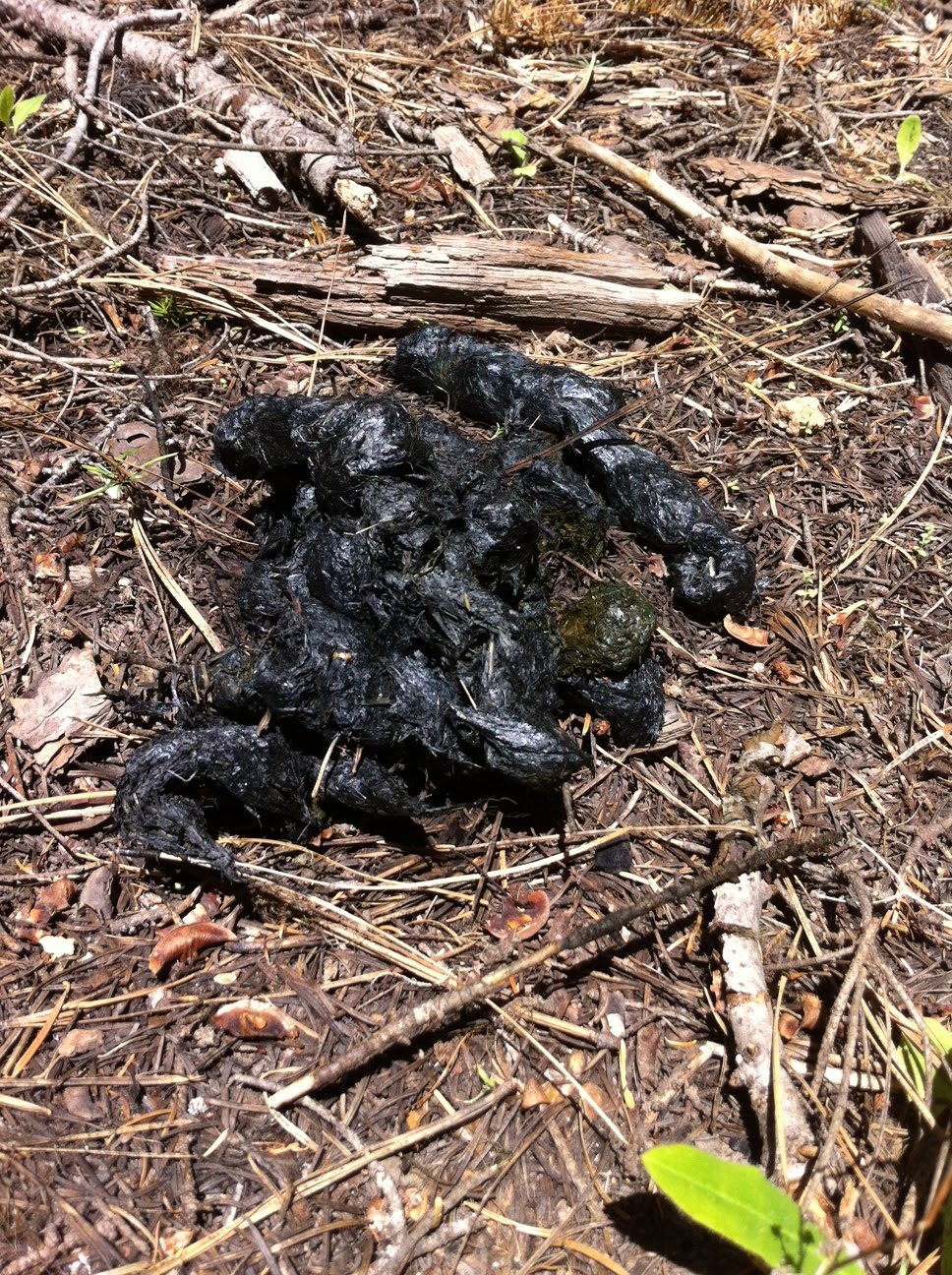
Bear evidence

Having never gone mushrooming myself, I imagined I'd be required to wear a blindfold and/or swear to secrecy about where we went. Neither was true, though I'll maintain professional discretion and say only that we were at some elevation on the eastern flank of Hood, in tall trees with a mostly clean forest floor, naturally clean. This wasn't recently logged or otherwise fussed with land.

JMB's porcini haul two weeks later

Did we find anything? Yes, lots of various, inedible but beautiful fungi, and a few morels of varying maturity and one young porcini sporting claw and/or bite marks from the lucky animal who ate some and left the rest for our amusement. That is, we found enough to show this was appropriate ground to search, but not enough to really do anything with. And not nearly what Jan-Marc found a couple weeks later when he returned and took home several nice porcini. Call it a bit late for the morels and a bit early for the porcini.

We did manage to find some bear shit. One thing I love about Oregon is how quickly you can go from city comfort to not just a nice hiking trail on a Saturday morning but honest wilderness. Bears equaling "wilderness" to me, city boy.

Old barn

Mushrooming attempts done, we made our way down several roads toward The Dalles, in search of tacos (asada, nice) and Mexican coke. Along the way we found an abandoned barn on the edge of a green wheat field, Mt. Hood striking in the distance. And we saw beautiful vineyards like Kortge, McDuffy and Hillside, all sources for Jan-Marc Cellars wine.

Sonoma county? Central Texas? Nope, The Dalles

Then we headed back up Mill Creek Road to Jan Marc's place, past some of the oldest vines in the Northwest, Lonnie Wright's The Pines zinfandel planted back in the late 1800s. This isn't just newfangled wine country, though most vines around here date back to the 1980s at the oldest. We didn't stop and walk through the old vines, but I'm hoping to at some point.

Jan-Marc in his element

Instead we drove up to Jan-Marc and Barbara's little cabin for a quick rest and then hiked around and then up the hill adjacent to their property. The reward? Stunning views from the top of Lonnie's Volcano Ridge Vineyard, a site planted in recent years that's steep and easy to see from the Baker's cabin.

From the top of Volcano Ridge Vineyard

What did I take away from this beautiful day? One, I love mushrooms and I've already gone foraging again. I won't be deterred by not finding much of anything. Yet. Two, The Dalles has some fascinating vineyard sites that are nothing like the nearby Willamette Valley. This is bigger red country, cabernet, zinfandel, tempranillo, perhaps even mourvedre? And three, Jan-Marc is a total bro. Always good hanging out with him, just soaking in a good vibe and an intuitive sense of where to be at all time. The guy always seems to have a smile on his face. I'm easy going, but I still have a lot to learn to that end.

June 24, 2012

Visiting The Grande Dalles

Soon after returning from my New York trip last month, I got an email from Scott Elder of The Grande Dalles wines. We share a distributor in NYC, Ice Bucket Selections. After being intrigued by two Grande Dalles wines that I tried on my visit, I was happy to get Scott's invitation to come see the vineyard.

The Dalles is a dusty town on the Columbia River about 90 miles east of Portland, full of orchards on the west side and expanses of wheat to the east. When it's cloudy and wet in Portland, it's likely sunny and windy in The Dalles. When it's sunny in Portland, it's sunnier still in The Dalles and probably still windy. This is the beginning of our land of little rain, a desert in the rain shadow of the Cascade mountains just a short drive from lush Portland. It's truly another world, for people as well as grapes.

Sometimes I think I'm stretched too thin with a family, a day job, two wine businesses and dreams. But I don't have a vineyard. Scott and wife Stephanie live and work in Portland, and nearly ten years ago they bought this land and began to plant grapes. If I remember correctly, they're up to around 30 acres planted. As their web site says, the vines struggle in this exposed, stark place, the land and vines accepting each other more than anything else. This couple has something incredibly special in this place, but clearly they have their hands full.

The vineyard was easy to find. A long, steep hill covered in young but already gnarled vines sticks out amid the rolling wheat. I pulled through the gate and Scott walked over, his crew of workers suckering the vines to focus the plants on growing and ripening fruit. We talked about our histories, mine in wine and his path via studies in France and general wine geekiness, a long study of soils that led him to his not exactly remote but still remote feeling place.

Stephanie and their young son were driving behind me on the road to the vineyard, so after introductions, we went up to the top of the hill where they have a small trailer on what one day will be a home site. The exposure here is extreme, the view of Mt. Hood and rolling hills worth taking lots of pictures. Which I did (and which you'd see here were it not for a freak thunderstorm later that day back in Portland that claimed my iPhone and all my recent pics).

Scott has lots of varieties planted. Syrah, Sangiovese, Cabernet Sauvignon and Tempranillo are most of the reds, with Cabernet Franc not faring so well and soon to be grafted to other varieities and Pinot Noir of all thing on the north-facing backside of the hill but not yet bearing fruit. And there's Riesling, which doesn't immediately come to mind in this inland climate. But it's windy here, the soils are thin, the vines struggle, Riesling included.

Walking down the steep rows a bit, the Riesling vines small with small leaves, Scott tells me he's happy for four feet of vine shoot growth in a season. When Willamette Valley growers are hedging their vines to control growth, out here you take what you get. I pick up some of the sandy, rocky soil in my hand and smell it. Clean, earthy, something I sensed in the wines I've tried from here along with exotic ripe fruit.

We wandered around the more gentle slope on the north side, talking about living and working in the city and the challenges of growing grapes and making wine, of a falling out with an original partner and Scott's challenge of selling wine in Oregon not made from Pinot Noir. My challenge has been the opposite - how to sell Pinot Noir when it seems everyone is selling it. There is no answer, we both will continue the fight, though I do think Portland needs to take more looks at The Grande Dalles wines. Local people, seek out these wines.

We ended up back at the hilltop trailer, tufts of rye grass and not much else growing out of the hard ground. Scott and family were planning to hunker down for the night, and I heard later it was pretty windy but dry there as Portland experienced a record (and iPhone killing) deluge. I left a bottle of my wine for them and we promised to get together in town soon to taste each others wines together and continue the conversation of how all this can work.

We better do that, because I lost my photos and it turns out that bottle I gave them was corked. Not a great start for me, but I really enjoyed meeting this couple, seeing their land after tasting some of their wines, and I appreciate the wry sense of humor you find on their website. Scott's the eternal dreamer, Stephanie the recovering pessimist. Their project here is daunting, but great things come from challenges. I'm looking forward to following their adventure.

June 12, 2012

West Side Steakhouse - NYC, part 3 (and last)

Vincent Wine Company wines are distributed in New York City by Todd Wernstrom of Ice Bucket Selections. The wines are in a few restaurants so far, such as SHO Sean Hergatt in the Financial District. But one of the nice surprises of my recent trip was lunching not once but twice at the West Side Steakhouse, which currently has the 2010 Vincent Pinot Noir Ribbon Ridge.

The West Side Steakhouse, on 10th in Hell's Kitchen, is an unassuming but elegant place that is more about substance than flash. While I wouldn't hesitate to come here for a fancy dinner, I like that it's low key, friendly rather than stiff. And the food's really good (and I'm not just saying that because they carry my wine).

Todd and I stopped by my first day in town to meet the lovely Ilona (at right, bad photo, sorry) and husband Nick, the proprietors, and enjoyed some nicely juicy hamburgers for a late lunch while talking wine and restaurant business. Todd and I agreed to return the next day for a more elaborate meal with a mutual friend who connected us earlier this year. We wanted to eat some steaks and taste a few other things in Todd's portfolio of US wines and small producers he direct imports from France.

The lunch turned into a three hour marathon of wine samples and some appropriately rare cuts of beef that I look forward to enjoying again on my next visit to town. For starters, we tried a Champagne that Todd imports, a producer that I believe is otherwise not in the US and that apparently was part of the original group of producers that started the Special Club where Champagne producers bottle special wines in similar squat bottles you should try whenever you can.

The NV Nomine-Renard Cuvee Nomine was an excellent surprise. Todd loves Champagne and said it was good, and on opening I liked it for its crispness. But with time in the glass and a little rise in temperature, this Champagne was exactly what I want. Finely balanced between apply crispness and broad yeasty, brioche flavors, lively in the mouth with persistent length, this isn't a powerhouse but such a fine, elegant Champagne. I expected this to be good and sometimes that's a hard position to be in. In this rare case, the wine was even better.

Then we moved on to a pair of Oregon wines I knew from Todd's web site but had never seen in Portland and certainly never tried. The producer is the Grand Dalles, a vineyard I've since visited outside of The Dalles and will write a bit more about. For now, imagine rolling hills of wheat outside a dusty city on the Columbia River about 100 miles east of Portland. In the middle of this windswept scene there's a dramatic, uninterrupted slope covered in syrah, tempranillo, cabernet sauvignon, even riesling vines, struggling in a way that good wine grapes should.

The 2009 Grande Dalles Riesling Leroy's Finest (named for the initial vineyard manager) was initially powerfully petrolly, with a sweetness somewhere in the spatlese range but with an alcohol level more in turn with Alsace. After the Champagne, it took a minute to adjust to, then I couldn't get enough of its piercing acidity and ripe apple and mineral flavors. As with Riesling in general, some people will love this wine, some may hate it. I'm in the former camp and encourage you to seek it out. Todd said the soon to be released 2010 is quite different, and that would make sense. 2009 was a hot year, 2010 much cooler. This 2009 showed the broad texture of a warmer year. 2010 might have more focus. I'm curious to try it to compare.

With my perfectly cooked New York Strip (you know, when in Rome...), I really enjoyed the 2008 Grande Dalles Home Place, a mostly Tempranillo blend with Syrah and Cabernet Sauvignon. Again, at first the wine provided a marked change of pace and its new French oak aging was certainly apparently. With lunch and air time, a tobacco and tar quality emerged that made me think of Spain's Ribera del Duero. A loose comparison for sure, but apt I think.

Around 3pm we said our goodbyes and it was off to the subway to continue my NYC wine shop crawl. Yet a  few weeks later, I'm still thinking of this place. Doesn't that say it all?

June 11, 2012

Wine shops of Manhattan - NYC, Part 2

After the pouring at Chambers Street, I spent much of the next three days walking and training to the wine shops of Manhattan. As many as I could fit in anyway. Special thanks to Dr. Vino for his enormously helpful map I recommend it highly. I used it extensively to find shops worth visiting, and some perhaps not. My goals - wine geekery, naturally. But I wanted to visit places that have my wine, places I'd like to have my wine, and places I wanted to see if they might want my wine. See a theme? I was on the wine schlep, but I really enjoy it.

In no particular order, I visited shops downtown, including Frankly Wines, around the corner from Chambers Street. It's a small shop that has a well chosen selection of things, including several from the Jura and lots of natural and natural-esque wines.

Fun to see Vincent on the racks
I went over to the East Village and up to Union Square to visit shops like Astor Place and Union Square Wine Merchant. Astor is a classic and I chatted up a clerk about Oregon wines, a frequent point of conversation in place of pushing myself and my wines. This was reconnaissance. My distributor doesn't have much wine to sell but next year and beyond there should be more. The cold room at Astor was amazing. Union Square was also impressive. Lots of Burgs and a good selection from Oregon. Didn't catch anyone's attention but I was in a hurry. I also stopped at Warehouse Wines. The shop is warm and there are "bargains" but some I'm sure are spoiled. I'm testing Dr. Vino's advice. $30 Gouges Nuits St. George 1er? I couldn't resist. The bottles looked new to the shop, capsules spun, etc. I'm thinking the low price is more about the 2007 vintage than compromised goods. We'll see.

If you're on the Upper East Side, check it out
On the Upper West Side, I breezed through Acker Merrall. Then hit 67 Wines and Spirits and found the expansive upstairs. Had another nice chat about how Oregon wines sell - favorably it seems. Then to Nancy's Wines for Food, no longer owned by Nancy (at the counter in the pic above). They have my wine and it was nice to introduce myself and chat a bit about the lingering effects of the 2008 financial meltdown. I felt naive. In Portland, of course we were and are affected, but things in NYC seemed still so raw. It was a common refrain at other shops and even with family in the area who speak of '08 like it's still happening. Which it is. Strange times, these. We're a bit insulated in Oregon.

One of Crush's treasures
lso made it to the Upper East Side, to see the sleek Crush, the old school Sherry Lehmann, the stalwart Garnet, and made my way over to First and Vine, another smaller shop that has my wine. Had a lovely chat with the owner about the times and what wines are moving, like that. Got another report (there were many) of how my distributor is great to work with. All told, a great visit and I'm so grateful for the support I've gotten in New York so far.

The spoils
Along the way, I picked up a few bottles to stash in my luggage for the return trip. Chidaine Montlouis Brut, Ramonet Chassagne, the aforementioned Gouges and a rare to Portland anyway bottle of Olga Raffault Chinon Blanc. Yes, all French wine. Not cheap but not ridiculously expensive. All for research purposes that I swear I'll write about when I get around to opening them. Really. Promise.

Of course, looking at the Dr. Vino map there are days and weeks worth of stores I missed. They will have to wait for another trip. And there there are the on premise accounts. We tried to get to Dovetail and a few other places like SHO that have my wine or soon should. Unfortunately, nothing worked out this time but, again, I have little wine available in NYC still so we'll save those appointments for next time. I did have two lovely lunches at the West Side Steakhouse in Hell's Kitchen. More on that next time.

June 01, 2012

Chambers Street - NYC, Part 1

So I'm back from New York City and reflecting on a busy few days working the market there, which was great, and catching up with a place I've missed for too long. How incredible to spend my time going from wine shop to wine shop, and even pouring for a buyer at Chambers Street Wines with my distributor Todd. It means a lot to me to even think that that shop, of all shops, might possibly bring in my wine, at some point anyway. To be there would means a lot to me, as silly or uncool as that might sound. But maybe the whole reason for going to New York this time was to finish something from my last visit. You see, I'd never actually been inside Chambers.

My last trip to New York was nearly ten years ago, fall 2002 when I had an unusual visit to town. I used a certain name your price online service to get a cheap flight for the weekend for a college friend's wedding, and ended up with flights that got me into Laguardia on Friday just before midnight and left at dawn Sunday. The real problem was that I needed to be in Westchester county and had no money for a car, so I planned to train up there in the middle of the night, hoping to be met by another college friend who wasn't sure I'd be on that train. All I knew is that we had a history of appearing for each other in times of need. I got off at Chappaqua, the train departed, it was 2am and deserted. Except for Mark standing next to his car in the empty parking lot, grinning. Seeing him there was a great feeling at the end of a long day.

So I got a little sleep, we went to the wedding up the Hudson valley the next day and came back to Chappaqua for dinner. Now I needed to figure out a way back to Laguardia. Mark couldn't take me, the train didn't run early enough and a towncar was out of the question. My bright idea? Take the midnight train back to Grand Central and wander the streets of Manhattan for the night until it was time to take the subway to Queens. It would be just like my studies in Europe, where I got in the habit of taking long, late night walks through empty streets of London and Vienna, seeing the city a little differently than most people do.

Where did I want to go? Honestly, Chambers Street Wines. I didn't care that it was the middle of the night, the store long closed. Chambers had opened up the year before, not too much before 9/11, and I knew about it from Wine Therapy, the precursor to Wine Disorder, the most New York-centric wine discussion forum on the internet. Sorry inside joke. It's not just a forum, is it.

The Doghead, Robert Callahan, was the operative behind Wine Therapy and did the early website for Chambers. I loved reading his write ups on so many Louis/Dressner French imports that they featured, that you couldn't find on the west coast, that I was and remain fairly intensely interested in. I think they had Clos Roche Blanche Gamay for $7.99 or something, too cheap for most people to take it seriously. Those were good days for inexpensive, unknown wines.

With a bag over my shoulder, I took the subway downtown, got out at Chambers Street and went searching. And I couldn't find. Me. Direction boy. I can't recall not being able to find anyway. This was before smart phones and I didn't have the exact address, but it's a small area and I figured I'd find it. No luck. And all I wanted was to peer in the window like a dog locked out for the night. Even that would have been sweet for an irrational wine geek.

So I looked around and thought, what now? Of course, ground zero. World Trade Center. It's just a few blocks south and when I got there it was crowded. Remember, it's nearly 2am Sunday and, for the darkness, it looked like a decent afternoon's crowd at Pioneer Square here in little Portland. The flood lights were on the site, just a big pit then, but I'll never forget all the people, no one really saying anything. It's not like any other place.

I took my time there, reading the installations, remembering my first trip to New York as a teen when I had to wear a borrowed jacket at Windows on the World because of the dress code, mostly thinking of that day. Finally I turned away, walked down Wall Street and saw that something was getting back to normal in this town, two very drunk professional looking guys peeing on the steps of Federal Hall.

It was around 2:30am now. I was tired, I couldn't stop thinking about 9/11, the city was alive and deserted at once. I thought I'd walk out onto the Brooklyn Bridge. So over to the bridge run up, cyclists passing me occasionally as I went up the plank walkway, out onto the old bridge I'd never seen this close. Near the middle, I sat down on a bench, exhausted, the cars passing by, more bikes, some people once in a while, the early fall night air still warm or at least not cold, the river below and the giant buildings of lower Manhattan right there. I sat for nearly an hour, just thinking.

Heading back downtown on this trip, in the daytime, to pour at Chambers Street, that was sweet. I don't remember everything I was thinking about on the bridge back then, but it was October and I knew a late harvest was coming. I thought I might not be in New York in October much if I kept dreaming of making wine beyond my home experiments at the time. But I wanted to come back, at some point, with my own wine.

So here I was, at last. One of millions on the island on a mid-week day. But it felt special. And by the way, Chambers is at no. 148. And I'll be back long before another ten years pass.

May 20, 2012

Winemaking as biography

I'm sitting in the Jet Blue terminal at JFK airport after an excellent first trip to New York City on the wine schlep. Meaning, I have a distributor selling my wine in Manhattan and I enjoyed the opportunity to work the local market for the first time. More on that soon enough.

While I wait, and undoubtedly for the hours of my long flight back to Portland, I'm reading Walter Isaacson's biography of Steve Jobs, highly recommended to me by my brother-in-law. So far I've only managed to read the introduction, but I was struck by Isaacson's recounting of how and apparently why Jobs chose him to write the book.

Jobs apparently thought Isaacson was good at getting people to talk, to open up. And despite occasional misgivings, Jobs professed he had nothing to hide. He wasn't always proud of what he'd done but said there weren't any skeletons in the closet. Jobs wanted Isaacson to tell the whole story.

That's what I want to do with grapes. I want to get them to talk, to open up, to listen to them. I want to tell their story, not mine. It's not a new thought for a winemaker to resist making his or her own stamp on thing, and of course any winemaker or biographer still has a fundamental impact on the final product. Our names go on it after all. I've just never thought of winemaking as biography until now. I want to think more about that, but I like it for now.

Time to board. More on the NYC trip in a few installments. Trips to wine shops around town, a pouring at Chambers Street Wines, and the most ridiculous dinner at Picholine last night that I won't soon forget. I love New York.

May 10, 2012

2010 Vincent wines sold out

I'm happy to say that I've sold out of all four of my 2010 Vincent Wine Company wines. It took more than 12 months to sell 200 cases of the 2009s and only six months to sell all 300 cases of pinot noir from 2010. I'm excited that things seem to be starting pretty well.

As one of my growers suggested magnanimously, I should make more wine, presumably from his grapes. I will this year, with chardonnay coming online and maybe another bump in pinot production. It's not easy. I have a full time job outside of wine, so I think it's smart to grow slowly. Plus, it takes money to grow more quickly.

All of this I say apropos of nothing, only that I've learned it's right to celebrate things like this. And celebrate we will. Then next week it's off to New York to help promote the wine we're selling there. I'm looking forward to that trip. More on all that soon.

May 06, 2012

Requiem


When people ask what's the oldest wine I have, right now I'd say those nebbioli from  the 1960s that I got from Chambers Street last fall.

The real answer is this single bottle of 1943 Dom Perignon, one of the oldest wines of the most famous labels in the world, a Champagne grown and made in what must have been one of the darkest years of the second world war.

The year 1943 seems like a long time ago, and it is, though you're still in your 60s if that's your birth year. Not young by any means, but not old. Not quite yet.

It's an eternity for Champagne, especially this one.

I don't usually mention the Dom though. It's not wine you can have dinner with anymore. It's gone. The wine that once existed is now a memory, the bottle an urn on the shelf. Something I'll always keep because it makes me smile.

This bottle came with a few others from my great uncle, a gourmand in the old school sense who's long deceased. I house sat once and in the old wine cabinet were some legends, including a few of these. I opened one and it was dead then, maderized, cooked.

The others showed the same signs of seepage, usually from heat expanding the wine, forcing is out around the seal of the cork, ruining the wine. I kept one and have had it ever since, like a pipe from my grandfather, nothing I'll ever use but something from them both, something of them.

It's just not really wine anymore. It's become something different, its life unwound until it's a pile of thread on the table, an unraveled spool, sweeter still because it makes you smile anyway. Even if it can't come for dinner anymore.

May 01, 2012

2006 Qupe Marsanne

I used to buy Qupe Marsanne every year back in the 1990s. It was among the cheapest wines Qupe produced and I remember liking it a lot. Over time, I've found that some things I liked a lot back then aren't things I still like. Many other things still ring true, and Qupe Marsanne is one of them.

I haven't stayed up with Qupe as a producer. I remember them back in the day as a maker of less intense, more balanced Rhone vareity wines, mostly of the red variety. Their basic Central Coast Syrah was an easy go-to wine at home and out in my San Francisco days. Their other bottlings usually seemed like interesting wines at reasonable prices, even at the high end.

A while back I found some stray bottles of 2006 and 2007 Qupe Marsanne. This wine is known to age well, with five or six years still on the young side. I thought I'd try the 2006 to see if that's still true. Oh my god, if you ever wonder what I like in white wine, here's an example. Stony, with melon and citrus flavors, beeswax to round things out, crisply acidic but so flavory and still thirst slaking. Truly a wine that compels another sip.

So apparently Qupe is still up to good things. This isn't typical, commercially common wine. Yet it is delicious, and honestly makes me want to find Marsanne to play around with. That's the trouble with making wine. You taste another grape and think...hmmm, I want to make some of that. For now, the Qupe will suffice.

April 29, 2012

Focused

Recently I heard a report that a well known wine writer had tried one of my Pinot Noirs and called it "focused." We'll see if the wine actually gets written about, but no matter. I love that descriptor and understand more than ever how much I look for focus in wines, mine as well as others.

Thinking about focus, I'm reminded of a sort of obscure book that I read a couple years back and recently reread. It's When I Whistle, by one of my favorite authors ever, Shusaku Endo, a Japanese novelist of the mid to late 20th century. I recommend him highly, though you may not find his writing as appealing as I do.

Endo writes simply, with a poetic focus that charms you while slowly revealing the heartbreaking depth of his characters and plot. Even in translation, and surely something is lost from the original Japanese, each word is precise, intentional, mise en place. He writes fiction but everything is non-fiction with Endo. He writes what is real and true.

That's how I want my wine. Focused. Non-fictional. Precise with an ease about it. Specific to a place and time. Enduring, I hope. And perhaps a bit haunting, so you don't forget it very easily. Like Endo.

April 11, 2012

Vincent wine tasting this Sunday

Elevage readers, please come a tasting of my Vincent Wine Company wines this Sunday in Portland. Our friends and Guild partners Helioterra Wines are leading the event, with some new releases to pour and the launch of the Helioterra Club.

I'll be there pouring my 2010 Pinot Noirs and perhaps a barrel sample of 2011 if people are interested. We'll have wines for sale, including some discounts on my 2010 magnums. I went a little crazy with mags last year after not doing enough the year before, so check that out.

There will be food from Cheese Bar. Best of all, there is no charge. Come taste, nosh, hang out...and if the spirit moves you, buy some wine.

Details:

What: Vincent Wine Company and Helioterra Wines tasting
Date: Sunday, April 15, 2012
Time: 1-5pm
Location: The Slate, a mixed use space at 2001 NW 19th Avenue in Portland, Oregon


April 08, 2012

Paper chromatography


Even though this year's paper chromatography has an unfortunate streak on it, I still love the pattern. I won't bore you with too much science, but essentially we use the chromatography process to see if there's still malic acid in the new 2011 wines. Malic acid is sharp tasting and in red wines we generally want it all converted to softer lactic acidity through the process of malolactic fermentation.

To test for malic acid, I dab a bit of wine from each barrel of pinot noir at the bottom of the chromatography paper. Using a developing solution, we see yellow marks appear to show the presence of various acids in the wine. On the right, midway up the paper, you can see a dark yellow spot. That's a sample of pure malic acidity, and it shows where malic acid appears on the paper. Moving to the left, you can see how there are no similar yellow spots in the same zone, meaning there's no malic acid in these samples. The exception is near the white streak, a touch of yellow from barrel 9 that presumably has some malic acid left.

I did this test a couple weeks back before a spring break trip, so I expect barrel 9 is done by now. I'll take a sample of that barrel to the lab to see for sure, then add a bit of sulfur to all the barrels and allow them to continue aging before bottling later this year.

I'm excited about how 2011 these wines are developing. They show nice acidic freshness, something I want to see more of in my wines. I'm particularly excited that this year I finally appear to have allowed the malolactic to happen successfully on its own. I've added a bit of malolactic bacteria to my wines in past years, after having a little trouble getting it to happen on its own. For whatever reason - art? perhaps. science? no. luck? definitely - this year it worked. These wines are truly nothing added, nothing taken away, pure. Just how I want them.

March 17, 2012

Midnight in Paris

So I finally saw Midnight in Paris, after far too much delay. I have a special fondness for Woody Allen movies, as I suppose many people do. My fondness feels different though, special to me anyway.

However, you must know this. If you go to the movies with me, you'll find me momentarily distracted by anything wine-related. So please excuse me if the scene where Owen Wilson and company taste wines overlooking beautiful Paris caught my eye. I believe they were allegedly tasting old things like Haut Brion, obvious for its distinctive bottle shape and iconic label.

But what was this? Rausan-Segla, a second growth from Margaux, on the table with several old legends? Sure, it's an historic property and would fit in the line up, but the label was all wrong. The bottle pictured - assuming I'm correct and I've tried without success to find a photo on the interwebs - showed a contemporary Rausan-Segla label, the exact same as a bottle I have in the cellar, one that already happened to be on the same shelf as many others waiting to be opened. One I've meant to get to for a while.

This bottle is different from the many strays I've collected. I suppose it shows my patience. I bought a pair of the 1994 Rausan-Segla Margaux in the late '90s at the Ashbury Market, the lovely little market across the street from my San Francisco apartment of many years, long known for its excellent wine shop. Last summer on a visit to the old neighborhood, I sadly found the market shuttered. Yet I clearly remember picking out this wine, the Wong family cashier remarking on my bold purchase of two not inexpensive bottles. My rationale at the time? Bordeaux prices were skyrocketing, I'd spent a good deal of time in France in 1994 and had an irrational fondness for the vintage there, and I wanted some wine that I could and should age, patiently, with the hope that some day I'd open them and be rewarded.

I never opened either bottle. They sat for a year or two in the interior closet of the apartment, honeycomb stacked with several other bottles. I packed them up in boxes and moved to Portland in 2000, where they rested for a year in the basement of a rental house, then for more than a decade in the basement of our bungalow in NE. Untouched, or at least unopened.

I thought many times about what would be inside. 1994 is a sentimental vintage for me, but not necessarily a great year anywhere in France. It was a warm year overall, but rains in many areas, including Bordeaux, cause the year to be overlooked by more obvious vintages. Overall, there's a hardness, a lean quality to the wines of this year, something I enjoy for the lack of plump, even fat ripe flavors that increasingly afflict even the classics of old France.

Seeing Midnight in Paris and being momentarily distracted by the apparently off-period label told me something - it's time to open this wine. So tonight was the night, for the first bottle at least. Again, you can see the dark, youthful color of a wine that smells no more than seven or eight years old. It's amazing how wines can persevere. The aromas are classic old school Bordeaux. Lean but rich at once, currants, gravel, toast and slight bell pepper notes that scream left bank cabernet sauvignon. The flavors are medium bodied, delicate if you're a fan of lightness, dilute if you're looking for power and richness. This is elegant Bordeaux, piquant but not lacking flavor and length. Young, but the tannin I've read about in early tasting notes of this wine seem resolved, or resolving. It was delicious with grilled flat iron steak, fresh asparagus and rice. And afterwards, as I lingered over a glass to sniff and taste, thinking of Paris, of Fitzgerald and Cole Porter, dreaming for a moment of a late night wander through Parisian streets, searching.

I should remain patient. I have one more of these, and while it's not the world's greatest wine, it's more special to me still. And given what I tasted, I'm sure this wine will last and perhaps improve over another decade. I'll wait and see.

March 16, 2012

2000 Montirius Vacqueyras Clos Montirius

Here's another stray bottle from the cellar that somehow never got opened. Until tonight. I originally bought two of the 2000 Montirius Vacqueyras Clos Montirius at a local supermarket that has a particularly rich bargain, where good wines end up at half off, sometimes from already marked down prices. Maybe this should have been $20, but I think I got this for $8 per.

The idea was...good commune in the southern Rhone Valley, good producer, biodynamically farmed grapes, older school winemaking, it should be great. And the first bottle was. In fact, I remember thinking it was better than I expected and I should hold that second bottle for some years to see how it aged. And I held it. And held it. Maybe seven years now. For a while I forgot about it, then found it again in a box of wine in the cellar and put it on the shelf to be opened. It waited some more.

Tonight, finally, I pulled the cork. Not that it necessarily matters, but the cork looked perfect. Stained dark on one end, otherwise brand new in appearance. There's something pleasing in the sight of a perfect cork. As you can see, the wine is dark garnet in color, lively despite 12 years. Initially the aroma was a touch old with raisiny fruit. Then gradually the wine revealed itself, concentrated and powerful, plummy, complex with pipe tobacco and warm stone aromas. The flavors followed, with a dried fruit strength, resolving tannin that still gave good grip, more than adequate acidity to convey freshness, and a long, bottle sweet finish that lingered well. This wine could be nothing but southern Rhone, full of stony, meaty, savory garrigue nuance, like walking in the hills of around Ventoux or, to bring it closer to my experience, Santa Monica. That warm, herbal, dusty scent of hiking in the hills.

At first I thought this might have been better a few years ago. With time it seems perfect now. I think it might last a while longer but probably lose freshness and turn more raisined. Then again, considering the '69 Sizzano we had last weekend, maybe it will go another 30 years and amaze someone for it goodness despite a second tier appellation and modest price. Wine's like that, full of delicious surprises.

March 11, 2012

1969 Berteletti Sizzano

Last November, Chambers Street Wine in New York City emailed a unique offer of Nebbiolo Vecchio, or old Nebbiolo from mostly lesser known regions of northern Italy. There were a few things from Barolo and Barbaresco, or maybe they just had some old bottles in stock. The real show was a broad assortment of vintages from the 1950s through 1970s from DOCs like Carema, Ghemme, Spanna and Sizzano, mostly from producers I'd never heard of.

Oddly, the internets seemed to lack much detail on the producers or vintages. The Italian wine bible, Wasserman's Noble Wines of Italy, predictably had more to offer. There was a good deal of information on these otherwise obscure growing regions, certainly some nice detail on the old vintages, occasionally a note on the producers involved and even a specific bottling or two in the offer. But everything I saw suggested nothing from these regions was really made to last for decades. And the producers involved were largely not the few notable ones that serious Italian wine geeks would know.

Nevertheless, I couldn't resist putting together a collection of bottles, all from the 1960s with the exception of a single bottle from the year 1970. Chambers is as good as wine shops come, the prices were surprisingly reasonable for wines of this age, and though many of my initial selections had quickly sold out, I felt confident that anything I purchased would at least be interesting, certainly educational, and perhaps wonderful.

 I followed Chambers' instructions to let the wines rest after their journey to Oregon. These were fragile wines, they said, that, whenever one opened them, might need some patience and coaxing to reveal themselves. I have no problem with that. I'm patient. But I couldn't help noticing the color of the wines through the green glass bottles (most are darker brown). Ruby, quite translucent and certainly not brown, promising.

Already these wines have fallen into the "when do I open them?" trap. They've been here for three months, and only now did I take one out to the Oregon coast for a bit of a retreat with my partners in Guild Winemakers. Surely were would cook nice food and pull corks on some variety of bottles. What better time than to see about the 1969 Berteletti Sizzano? If it was dead, and the vintage by all accounts was awful, we'd have other things to take its place. If it was even remotely drinkable, who isn't interested in trying a wine as old or older than oneself?

I needn't have worries. Out came a stubby, plain cork and into the glass went the wine. One sniff and I knew it was marvelous nebbiolo vecchio from the commune of Sizzano. Look at that color above. Not young, but far younger looking than most 43-year-old wines have any business being. One partner, who makes nebbiolo locally, simply said, "it's nebbiolo." If there's an Italian red grape that should stand up to the decades, it's nebbiolo.

This wine was astonishing. Much better than I expected, more youthful but so mature, full of bottle sweetness and meaty, earthy notes of age. There was some nice cherry fruit in there, a bit any way, and the texture was so good. Tannin resolved but still present, the finish pretty long, soft and yet focused at once. More than just holding up, this was excellent wine.

Alas, we didn't quite finish the bottle, what with many other things to try and, admittedly, lots of seafood on the table. I was determined to try this wine in this company, so I opened it anyway, food match be damned. I was also determined to save the rest for tonight, to see if it survived.

The picture above shows how the color browned overnight. Still, the wine resisted oxidation and held together fantastically, the meaty boullion character from last night showing a bit more pronounced, the texture and length intact so that I couldn't let that last glass go to waste.

Drink a wine like this and one is transported somewhere else, some time else, in a way nothing but wine can do. Back when wine was made more simply (even if Berteletti wasn't a tiny producer - numbers on the bottle suggest there were are least a few thousand cases of this wine - I can only imagine their grape growing and wine making techniques were quite simple compared to norms today). Back when walking on the moon was something new and one's life had hardly begun.

Needless to say, my expectations for the rest of my purchases has risen considerably. I know, I know, there are not great wines, just great bottles. This one may not have been great exactly, whatever that means, but it was very, very good and incredibly memorable and thought provoking. Almost perfect if you ask me.

March 07, 2012

Chehalem Mountains Winegrowers trade tasting

I'm remiss in reporting on a nice trade tasting put on last week by the Chehalem Mountains Winegrowers. (Let me be clear in saying that I was a guest of the association, driven there and back to Portland with other industry types. I also make wine from the Ribbon Ridge AVA, a unique lobe of land tucked into the southwestern corner of the area and represented by this group.) As you can see in the adjacent photo, the event took place at Raptor Ridge Winery, which on the northern slope of the AVA in the lighter colored portion of the map.

The Chehalem Mountains run northwest to southeast and feature three distinct soil types. I love how the association's logo map shows by color the general limits of each soil. The green area represents the sandy soils of ancient ocean floor sediments, lifted over time by tectonic action. This area includes Ribbon Ridge and to my taste delivers a darker fruit expression of Pinot Noir. The red areas represent, naturally, the red volcanic basalt soils most typical in our Dundee Hills, but common here in the steep southern slope of the Chehalem Mountain and the entire Parret Mountain region on the lower right. I find the basalt soils give a redder character to Pinot Noit. Finally, the younger windblown Loess soils on the northern flank, where Raptor Ridge is located. I honestly don't have a good sense of this soil type, in terms of Pinot Noir anyway. Windblown soils are meager nutritionally, which is great for vines. I need to do more research to speak with any more knowledge though.

Obviously this diverse soil range might make terroir oriented wine lovers wonder...why not three AVAs, or growing areas? The association admits on their website that over time it would seem likely that a few subregions will emerge. For now, this broad area of the northern Willamette Valley, that happens to be the closest of our AVAs to the city of Portland, is one big region full of several top quality producers.

On the whole, the wines were delicious. I have made a point here previously that it's simply impossible for me, a local wine producer, to write critically of other local producers. That said, I was delighted in the range of wines, white and red, particularly in the delicacy of style that many are going for. I didn't even get to half of what was being poured, but a few that stood out for various reasons...

Adelsheim's crisp 2010 Pinot Blanc Bryan Creek Vineyard. Wished they were pouring the Auxerrois, which I've loved in the past.

Anam Cara's range of Pinots, particularly the 2008 Pinot Noir Nicolas Vineyard (by the way, I also enjoyed the '08 Et Fille Nicolas Vineyard a few nights later at a dinner in Portland).

Anne Amie's range of wines, including crisp 2010 Pinot Blanc and 2009 Pinots with a soft touch. I'm loving what Thomas Houseman is doing at this property.

Beckham Vineyard's 2011 Rose of Pinot Noir, a beautiful, juicy and dry pink wine from a producer I'd never heard of.

Bergstrom's 2010 Old Stones Chardonnay, really good Oregon chard and fairly priced in the low $20s. The Pinots were also more restrained than I remember from past years.

Dion's delicate Pinots from their 1970s era vines on the far northern end of the AVA.

JK Carriere's 2011 Glass White Pinot Noir, really a very pale rose that I usually enjoy.


Utopia Vineyard Pinot Noirs in general, with nice whole cluster aromatics, toasty but graceful.

The tasting featured an unexpected aspect, which I loved but I can imagine might be difficult for the non winemakers to appreciate - Pinot Noir barrel samples of 2011s from a few unnamed producers. The samples were arranged by the three soil types, but at this stage with many wines still going through their malolactic fermentation, all I felt you could really get was a general sense of the vintage, at least from this specific growing region.

The view from Raptor Ridge on a beautiful late February afternoon.
So how were the 2011s? Dark in color, bursting with flavors even with the sharp malic acidity in some samples still to be converted to the softer lactic acid you're used to in finished red wine. In short, they reminded me of the great 2008. How can that be? 2011 was our coldest season in 20 years, much colder than the cool, late 2008 harvest. The answer I think is in the late and dry harvest, where grapes ended up getting the time to get ripe even at remarkably low sugars. Yes, most producers had some grape lots with pretty low brix (sugar levels), but from my own production experience, my experience tasting other producers barrels (mostly friends), and now tasting a bunch of samples here, all I can say is wow. 2011 has produced some powerful, but not powerfully alcoholic, wines. The best wines will live a long time in the cellar, and like the 2008s they may seem a bit dense at first.

The press better not make any judgements before tasting these new wines. All summer we heard about the cold season and how disaster could be upon us. Then we had a perfect autumn, most unexpectedly but still. Taste the wines when they come out later this year and all through the next. Yes, there will be lots of delicious rose from some of that lower brix fruit. Some people inevitably will produce some red wines that lack sufficient ripeness. When isn't that true? But from what I'm tasting, and believe me I don't have much 2011 wine to sell so this is no sales pitch, I cannot wait to see the 2011s hit the market. And we'll see which critics actually taste wines before making pronouncements.

March 05, 2012

Little Bird

Today saw a day trip to eastern Washington with the Guild Winemakers crew to research sources for our future bottlings. Leaving Portland before dawn, through the Columbia River Gorge and then north through the Yakima Valley to the Wahluke Slope, pictured left. Sagebrush and scrub, tumbleweeds rolling in the wind, the sky and landforms as big as I remember New Mexico many years back. Clouds hanging over it all, but no rain, just dust. A haboob.

This land makes me think of Mary Austin's The Land of Little Rain, a southwestern classic I read in grad school in San Francisco, about the perseverance of living, surviving, in a landscape where water leaves you lonely, but not the wind.

We found what we were looking for today, plans for our future, clarity I suppose. Things we can live within, like this landscape, indifferent to us but patiently giving what we need most if we can see it.

Then back again to our home, the sky turning grey near the Dalles, the rocks by the roadside turning mossy at Cascade Locks, then the rain, only drops, then hail, then sun, the pattern of spring. Then Portland at sunset, clouds reflecting the day's dying in a way I wish I could capture and give on demand. It seems that important.

Tonight it was back to the city, a beautiful dinner at Little Bird downtown with a partner and barrel people, discussing forests and grains, toast levels and aging protocols. My mind wandered a bit though, late, to the music. The district sleeps tonight from the postal service, old for being new enough to hear in a modern restaurant. And Rome right after it. The coliseum.

We drank 2009 Four Cairn Syrah from Napa Valley.

February 26, 2012

October 7, 2001

Many things were happening on October 7, 2001. As usual, summer had become fall in the Willamette Valley. The grape harvest was on, and St. Innocent winery was apparently finishing two days of harvesting Anden vineyard, what was then the upper part of what had been and is again the great Seven Springs vineyard, split briefly due to family issues. My beloved San Francisco Giants were finishing up a disappointing season. The war in Afghanistan began. And I took my first and only drive to Mollala, OR, to pick grapes to make my first wine.

When I'm out pouring my wine for the public, one of the most common questions I get is, "how long have you been making wine?" The answer is not necessarily so simple, though it's not as complicated as the other main question I get, "how did you get into wine?" With that one, I can cite any number of epiphanies, a sequence with which readers may be familiar. Being maybe five years old and going on a day trip to Napa during a big family reunion in San Francisco back in the 1970s, the scent of wine soaked wood from the cellar at Inglenook a memory that's never left me and never will. Or studying in Europe during college and traveling to the remarkably picturesque village of St. Emilion in the Bordeaux region. Or later that year living with in Austria and getting schooled in the dry white wines of the Wachau and Weinviertel by my Austrian hosts. Or the bottle of '86 Steltzner Cabernet that my brother poured for me on my first night of a cross-country road trip after leaving college. Or, or...there simply wasn't one epiphany. It's complicated I suppose.

But how long have I been making wine? I usually answer "since 1999," when I first volunteered in the cellar of a California zinfandel and syrah producer then just transitioning from home wine making to the professional ranks. As I've written, that experience provided the model for my own garage wine making before I joined the professional ranks in 2009.

Really, the first day I truly made wine, my own wine, was October 7, 2001, a dry and mild but cloudy Sunday that was otherwise unremarkable at the time, at least that morning, but became one of the most significant days of my life. And keeps on returning in ways I never expect.

I was a new homeowner then, with an unexpectedly large garage that seemed perfect for making wine. I had found a listing for pinot noir grapes outside of Mollala at a local wine making supply store and drove down the valley to pick some hundreds of pounds of grapes myself, the Giants game on the radio in the car on the drive and, later, on my boom box in the vineyard rows as I picked. Slowly. Very inexperienced.

I knew very little about making wine at that point. I was smart enough to ask the grower on the phone when the last sulfur spray had been but innocent enough to take the answer at face value, especially when I arrived to find the vines covered in sulfur dust. I knew that wasn't good but didn't know why, so I went for it anyway and found out the hard way why that was a huge mistake. Sure, the terroir of Mollala may be less than ideal for pinot noir, but the wine sucked because that sulfur reacted with yeast during fementation to create powerful (and powerfully bad) aromas called mercaptans. You know, what they put into natural gas so you can smell it. So you'll know something's wrong and call the gas company before an explosion. Unfortunately, wine is a nice proving ground for mercaptans. This wine succeeded on that level only.

I shouldn't be too hard on myself. The fermentation was otherwise fine. All the sugar converted to alcohol, the wine had good color and enough body to, in theory anyway, make a decent drink. It just smelled and tasted like boiled cabbage under a sewer grate on a summer day. Dank. Nasty.

Happily, I didn't give up. If wine making is about one's quest for new mistakes, for all the things that could possibly go wrong in the process with occasional genius along the way, I was off to a wonderful start. Still waiting for the genius of course, but it was a good start.

I kept bottles of that wine for years, occasionally getting the courage to open one to see if anything positive had happened to that horrible stench. No, it never did and the final bottle went down the drain maybe two years ago in a fit to rid the cellar of this and other failed experiments that had finally outlived any seeming usefulness.

I sort of wish I still had a bottle of that first wine, not because it would be any good. Rather just to see it, to know it was real, which of course it was but now is just memory. Instead, I have other things to remind me.

Take the 2001 St. Innocent Pinot Noir Anden Vineyard, a stray bottle I've held for many years waiting for the "right time" to open. As I've written, I'm clearing through many of these random bottles and the other night it was time for this wine to receive its due. And oh my god, if my first wine was that bad, this is incredibly good. A bit tannic but otherwise remarkable, astonishing even. Wine that tastes like nothing else but Oregon, with the masculinity of Seven Springs vineyard and a savor that only the best Oregon wines ever show. This bottle was too good for Friday pizza night at home.

Of course, I had none of this on my mind when I opened the bottle. It was just another wine I'd waited on too long, or thought I had anyway, that seemed to need opening. Now. I poured it and immediately the scent made me laugh. This is why I make Oregon wine. This smelled unlike anything else in the world, unlike any other place in the world. The words I use may not be so distinct, but the wine utterly is. Cherries, black tea, a sense of green moss on a forest floor otherwise covered in brown leaves and needles, dry and earthy the way hummus smells, ashy in a way that convinces me it's most or all Pommard clone, like Burgundy but nothing like the Cote de Nuits or Cote de Beaune, if that makes sense. This is simply Oregon, and lovely.

Then I turned the bottle to read the back label and found the pity stats winemaker Mark Vlossak likes to print. When it was picked, how long it was aged, when it was bottled, etc. And the pick dates here were October 5 and 7, 2001, bringing back that latter day in a flood of memory that I've been thinking about all weekend.

That crazy day when I heard on the radio about the start of war on my drive home, wondering for more than a moment if I wasn't a presumptuous fool for making wine in the face of such catastrophe. But it's what I do. And that's the day it really all began.

February 20, 2012

Dinner at Southpark

I had the opportunity a few nights ago to dine at Southpark restaurant in Portland. It's not the newest or flashiest restaurant in town but I love it just the same. I suppose I'm biased because they put my 2009 Vincent Eola-Amity Hills Pinot Noir on their list last year and did well with it. In truth this was a special place for me long before that, and not just for the crab cakes I seem to order on almost every visit.

This particular evening saw a collision between two of my worlds - my winery and my day job at a certain urban university in the heart of downtown Portland. This occasion was a visit from a new leader at the national organization that's affiliated with our faculty union, of which I'm treasurer. I thought it would be fiscally prudent to bring a bottle of one of my latest releases to share with dinner. Ok, I wanted everyone to try my wine, fine, I admit it. Happily, they loved it and, in all modesty, so did I. My 2010s are really rounding out and I couldn't be happier with them.

Of course, one bottle wasn't enough for the group, and I was asked to select another. Why not keep it in the family? So I ordered a bottle of the 2008 Grochau Cellars Pinot Noir Willamette Valley. Astute readers will remember that this wine, the 2004 vintage, struck me at a dinner at Higgins several years back. I'd heard of this John Grochau character. We had mutual friends but I'd never met him. That wine led me to contact him, taste a number of his 2005s then in barrel and write about them on this site. I thought John was doing really interesting work with grapes from the Willamette Valley and beyond, and before I knew it I was helping with harvest. Then he moved into Portland to make wine in the city and I kept helping him, then launched my own label on his bond, then became partners with two other friends in Guild Winemakers. And through it all we became friends.

That's a long way of saying...now you know why I don't write about his wines here anymore. Until now. The server pulled the cork and decanted the '08 GC and it was rocking good from the start. Good enough to tell you why I shouldn't write about it but am anyway. John's been barrel aging his wines longer in recent years, not to give any woodiness to the wine (that happens quickly in barrel aging anyway), but to allow for more evolution in the wine before bottling, more curing to use my own words.

The results are really nice. I love the deep fruitiness of the '08s in general, with good structure and savory qualities perhaps because alcohols were more moderate in this year. This wine has all that, with a scent of Douglas fir like you might find morel hunting in the coastal hills (oh my god, it's almost morel season). Plus there's a lovely mix of fresh fruit, cured meats and other interesting qualities from a bit more barrel aging. Overall, there's lovely balance and depth, richness and restraint, and as I'd hoped, everyone at the table loved it.

There you have it. A lovely evening at Southpark that I had to write about. I hope you'll understand.

February 19, 2012

Demanding wine


I'm pretty easy going and I appreciate how easy some wines are to understand, to satisfy in a way.

Still, the most compelling wines are demanding. They need something from you and, in the right case, I find myself happy to go where the wine leads. I'm not looking for wine to "perform," a word I hear too much. Wine isn't a show dog. I want the wine to compel me to act, to respond.

This 2004 Domaine Confuron-Cotetidot Vosne-Romanee is a good example of demanding wine. Powerfully complex aromatically, hard-edged texturally, there is no sign of any greenness that makes 2004 notorious in Burgundy.

Instead, this wine has an alluring perfume, wild to be sure and perhaps to the chagrin of the brett police. This isn't clean wine but it doesn't seem dirty to me either. Rather, it is full of iron and oaky spice to complement the red fruit flavors, floral like a syrah from the northern Rhone that you'd suggest was Burgundian.

The palate is tannic, there's no getting around it. But I find the tannin toothsome, not drying, the wine cleansing where overly soft, fruit-sweet wines finish syrupy and not refreshing.

With food, the tannin immediately seems a non-factor, though the pleasing edge to the wine remains. And I find myself holding the glass, smelling the perfume and setting the glass down without sipping. Exhaling, thinking of that fragrance, classic Burgundy like a Burberry scarf. Unmistakable.

February 13, 2012

Overthinking

The cellar clean out continues, with some hits and several misses. Some disappointments we should have seen coming. Others have been surprises. "Good" wines that simply weren't good, or didn't age well, or were overly brett infected or otherwise bitter. Sure, there have been good bottles but too many haven't turned out well. I find myself overthinking about why this is.

Then after a busy day for everyone today, we had a ziti and salad from the grocery store. Easy, pretty good, but better with a glass of red wine. Something simply fresh and delicious, perhaps more if one were lucky. So down to the cellar and I find the last bottle of 2005 Neudorf Pinot Noir "Tom's Block" Nelson, from the northern part of the southern island of New Zealand. No thinking was necessary. This was the wine.

The match was almost perfect. Baked pasta and red wine is about as good as it gets on a February night, no? And this wine delivered. Spicy black cherry flavors, a gravelly earth undertone coming out over time in the glass, good freshness at seven years old, this wine made me stop in the middle of dinner to remark to myself how good it was, how good it made the meal. Really, what more could you ask for in a wine?