Showing posts with label Cabinet of Joy. Show all posts

December 05, 2010

Bottling Nocino

This weekend saw the final act of my nocino (no-CHEE-no) making that began last summer -- bottling and my version of labeling. In July, I picked green walnuts, chopped and soaked them in a variety of liquors and sugar and spices. Two partially full gallon jugs worth sat for months to steep and oxidize and otherwise maderize. Last month I poured the now chartruse brown liquid off the walnuts and sediment to settle some more and continue aging. Now it's December and time to finish things off.

This was my first attempt to make nocino and I thought I would make two jugs worth instead of just one, to have plenty. But after all this time, I figured I'd get only a little more than 4L of liquid. So I found square 250mL bottles and some t-top corks, which would give me between 16 and maybe 18 bottles. That's not too many if you plan to give a bunch away as gifts and keep several for aging, drinking, cooking (nocino whipped cream, anyone?). This stuff is good. So next year I'll have to make even more.

I began by straining the nocino once more through folded cheese cloth, into a tub big enough to combine both jugs. One jug had more sugar, the other less, but a blend turned out to be best. Then I poured the blend carefully back into a jug to make filling each bottle easier, with the little yellow funnel to keep things tidy. The only real challenge was dealing with foam that came from pouring the liquid, as you can see in the jug. I filled each bottle, waited for the foam to subside, then topped up and put a t-top cork into each one All together, I had 18 bottles.

I rinsed off each bottle and let them sit overnight, before heating up yellow sealing wax in a stove top pot to dip the bottle necks. It was tough to get the wax just the right temperature to adhere well to the plastic tops of the t-corks. Finally I got things right, waxing each bottle and dipping the waxed top into cold water to set quickly and give a little shine.

Then a final wipe down and silver Sharpie to sign each bottle in a way that ended up echoing old port and madeira bottles with their white stencil paint. So how does this nocino taste? Think liquid gingerbread with a kick. It's fairly sweet but appropriate to balance the pleasant bitterness of the walnut tannin. What experience I have tasting others' nocino, age should smooth out any rough edges, though this nocino isn't excessively tannic or bitter as I might have feared, being a newbie. In all, I'm very pleased and there are some lucky people out there who will get a bottle.

November 11, 2010

Nocino update

You may recall my post from July about nocino, the green walnut liqueur made in southern France and Italy and, more and more it seems, Portland, Oregon.

It all started with my friend and Guild Winemakers co-conspirator Anne Hubatch and family holding their annual nocino party on the last weekend in June. That's traditional nocino-making time, when walnuts are sizeable but still immature, the way you want them for nocino.

The Hubatch party had been featured prominently in Mix magazine in 2009, complete with instructions on making your own nocino. We were invited to this year's party but because of the crazy cold and wet spring, the walnuts weren't ready for nocino until mid-July. By then, I'd gotten my neighbor Edward's permission to harvest lots of walnuts from his front yard tree. So with a ladder and tree trimmer turned walnut harvester, I drew the attention of the kids on the block in my quest for perfectly underripe walnuts. With lots of help, I gathers several dozen and took them home to make nocino. After quartering the walnuts, I simply put them into two jugs and poured in white wine, vodka, everclear, cloves, cinnamon sticks, fresh orange peel and varying amounts of sugar as a test. The jugs were intentionally not filled all the way, then left out in the light, heat and cold to oxidize as much as possible over four months.

It's November and time to strain what's become a brackish liquid and check on progress of flavor and aroma development. I'd periodically open and close the tops of the jugs to give a sniff and to get more air in contact with the liquid, to help tame the fierce tannin from the walnuts. Thing really unripe bananas, and think of the oxidizing process as a slow cooking that helps sweeten and cure things until they are delicious. At least that's the idea. Along the way, things smelled great but quick tastes showed lots of raw tannin. I hoped time would help calm that down.

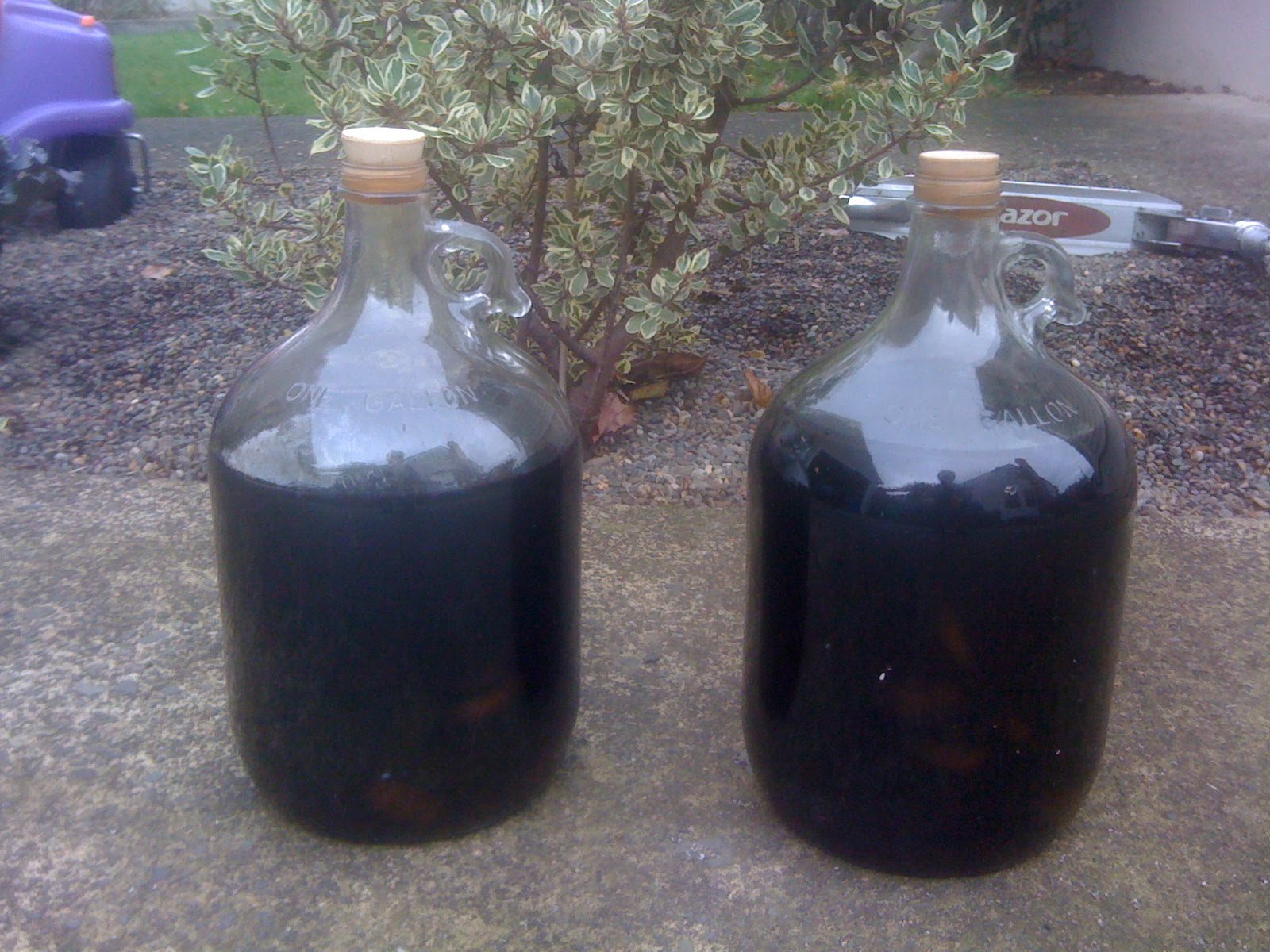
Now, I strained the nocino first through a fine mesh strainer and then again through the strainer lined with cheese cloth. I did a good job catching bits of sediment and the occasional wedge of blackened walnut, which you can see here. The fragrance of the nocino filled the garage where I was working and I couldn't wait to taste the nearly final product.

First I tried the half sugar jug, pouring a bit into a dessert wine glass and holding it outside to get a good look at the color in natural light. This sample was fairly bitter and tannic, definitely in need of either more time, more sugar, or most likely both. Then I tried the full sugar jug and it was much fuller and smoother, if a touch too sweet. I found it interesting that the full sugar batch on the right, which started out lighter presumably because there was less air in the jug (more full because of more sugar), now it's darker. Seems like the sugar caramelized to a browner color while the lower sugar jug on the left maintained more of a honey color, with some browning in the middle but noticeably less than the other.

I originally thought I'd end up bottling the two batches separately, but I found that a mix of the two samples was best of all. Now I'm thinking I'll blend them, but for now I kept things separate. Here are the two jugs of stained nocino in the middle, bracketed by the original jugs with stains on each showing the original fill levels., before I shook out the walnuts (which didn't take more than a minute for each jug). I'll let the strained nocino sit for a few more weeks to settle out more sediment, then perhaps strain again and pour into little bottles for keeping and giving. Neighbor Edward will get some, as will the Hubatch family. I'm definitely saving some for the future. I've seen that nocino can improve dramatically for a few years. But I'm sure a few other bottles will find their way into other hands. Nothing like nocino for the holidays.

July 20, 2010

Nocino Sunday

This past Sunday I took the opportunity to make two gallon jugs of nocino. What's that? Nocino (no-CHEE-no) is a green walnut liqueur common to Italy and southern France. It's traditionally made at the end of June, when walnuts are still immature and easy to quarter. It's a late year here in the northern Willamette Valley, so the walnuts weren't ready at the usual time.

My friend and wine conspirator Anne Hubatch of Helioterra Wines and her husband Robert host a terrific nocino party at the end of each June. Last year, the event was written up in Portland's Mix Magazine complete with pictures of the whole affair, a basic recipe for nocino that I followed and notes about various attendees who do different things to produce their own unique liqueur. Even if you don't read the rest of this point, check out that article.

Nocino is simple and fun to make. I walked down the block and asked a neighbor who has a terrific old walnut in his front yard if I could harvest some nuts. He said sure, so I got my ladder and tree trimmer/lopper and went to work selecting the best ones I could find. No squirrel bites, minimal spots, like that. For two batches I needed sixty and it didn't take long to get those.

Then I came home and washed the walnuts in a colander. They should look like small limes, and you cut them husk and all into quarters to put into a gallon jug. I tested one out before harvest all the nuts and I noticed the cut edges browned quickly. I made a point to put the liquids into the jug before the cut up nuts so that they wouldn't oxidize before being part of the mixture. I'd read that the walnuts will stain your hands fiercely, so I wore gloves while cutting.

So what all goes into nocino? As you can see, white wine, everclear, lemon zest, cloves, cinnamon sticks and sugar. And walnuts, of course. However, on Anne's advice I substituted half of the everclear with vodka. We had some old Russian vodka in the freezer. Apparently quality of alcohol isn't a big deal, so I took the opportunity to buy the cheapest plastic bottle of vodka to supplement what I had.

Ok, into the gallon jugs went all the liquids and I began cutting up the walnuts, shoving them through the bottle neck and into the liquid. That took a bit of time because I was making two batches, the only difference being the amount of sugar I added. Some people say that nocino recipes often suggest too much sugar. What can I say? I have a sweet tooth and I'm not at all opposed to sweeter dessert wines like Aussie muscats and sweet Malmsey, provided of course there's balance. In this case, the tannin from the walnuts and the spices add some balancing bitterness, but who knows how this will turn out? So I made one batch with quite a bit of sugar, 1 kilo, and another batch with just 500g. Some people sweeten their nocino to taste at bottling, but I'm guessing it's better to do it all up front. We'll see what we get.

You see, the key with nocino, like Banyuls or Madeira, is that you intentionally oxidize the crap out of everything by leaving the not quite full jugs out in the sunlight and heat of summer for months. That process essentially caramelizes things, turning what might now seem like a bitter, green beverage into a deep brown, gingerbread and wonderful Christmas cake in a glass elixer. Come the fall, I'll strain the liquid into small bottles that will be ready to drink come the holidays but improve for a few years or more, if you can keep your hands off it. That's also what I made two batches, so I have some to give away, some to enjoy soon, and some to enjoy further on down the road. Based on the various vintages of nocino I've tasted from what Anne and Robert call their "cabinet of joy," I'm more than a little excited about how all this turns out.